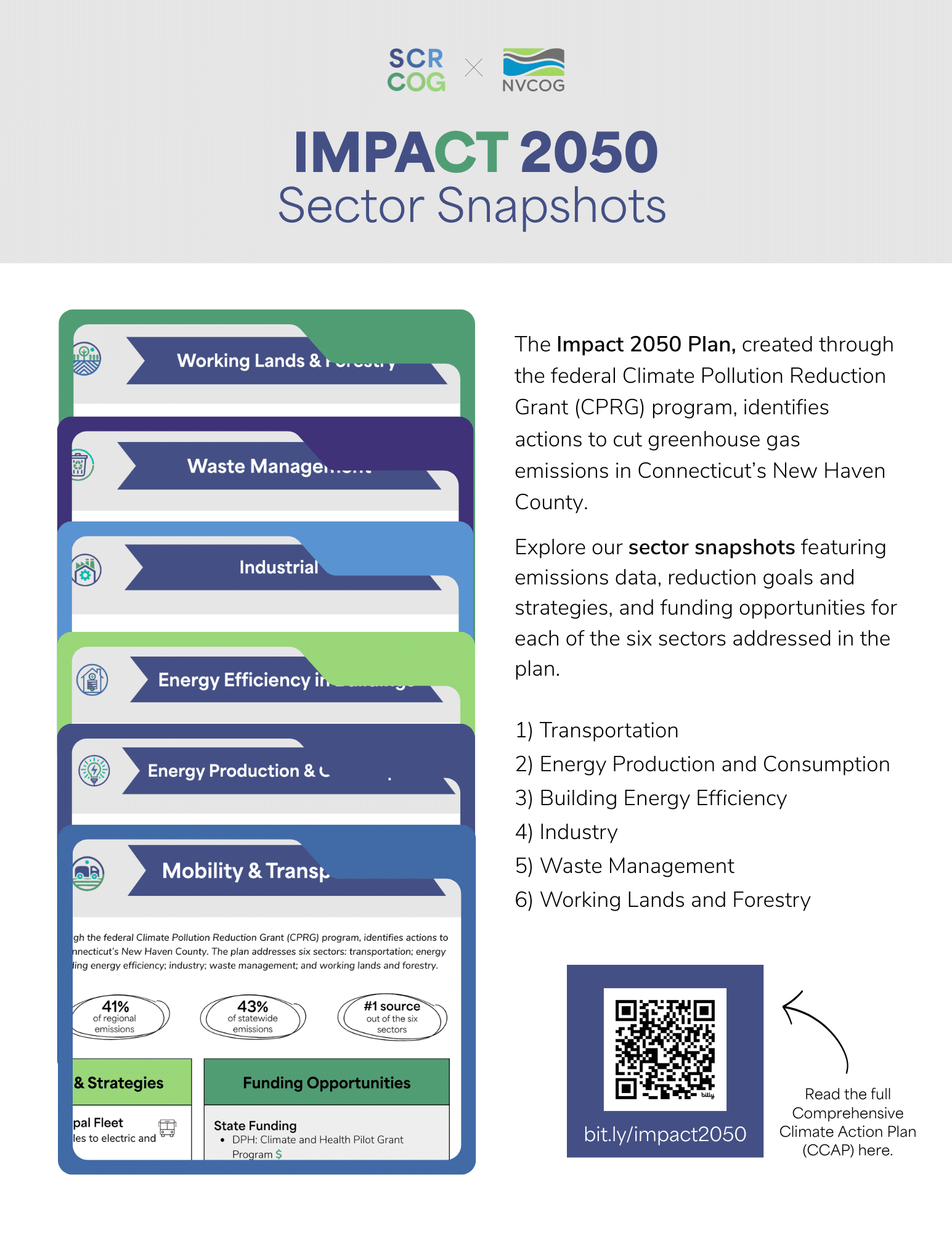
Measurable climate impact stems from well-defined goals and actionable strategies. Forming the core of the priority climate action plan outlines our various greenhouse gas mitigation recommendations by sector. Sectors include Mobility and Transportation, Electricity Production and Consumption, Energy Efficiency and Buildings, Waste Management, Industrial Impact, and Working Lands and Forestry. Within each sector, our goals and strategies are informed by an extensive analysis of climate action plans across the country at the regional, state, and city scales. Crafted within the unique context of New Haven County and developed in collaboration with our public engagement initiatives, these strategies are underpinned by a commitment to equity.
Our chosen priority strategies emerge from their dual capacity to curtail greenhouse gas emissions and provide tangible benefits to vulnerable populations. These benefits range from enhanced public health due to reduced air pollution to increased community engagement and economic incentives. Rooted in the present climate landscape, these mitigation strategies are designed to remain effective across various future scenarios. To ensure their adaptability, our priority strategies underwent testing within three distinct future scenarios, gauging their efficacy in achieving emissions reductions irrespective of the prevailing policies, opinions, and funding shaping each version of the future.

Mobility & Transportation
With its complex system of highways, railroads, ports, airports, and public transit systems, New Haven County’s transportation network is unique, considering its size. Transportation is the most significant sector contributing to GHG emissions in the state and the county, with cars and light trucks being primary contributors. In contrast, public transport only accounts for 0.24% of the emissions from this sector.
Electricity Production & Consumption
Renewable energy is the centerpiece for transforming the electricity sector and supporting a cross-sector shift away from fossil fuel combustion and towards electrification. Currently, the electricity sector accounts for 15% of the state’s total GHG emissions (CT DEEP). However, emissions are expected to rise if the electrical grid does not move off of combustion of fuel sources as we electrify our cars, homes, and businesses. That’s why investing in renewable energy solutions at the local and regional level is so important. We can support this transition by procuring renewable energy for municipal operations, utilizing on site solar, and supporting consumer solar incentives.


Energy Efficiency in Buildings
Energy efficiency in buildings is crucial as it reduces energy consumption, lowers operating costs and decreases greenhouse gas emissions. It is an essential sector to help combat climate change while promoting sustainability and cost savings. Improved energy efficiency in buildings also enhance the quality of life and productivity while reducing the reliance on finite energy sources and promoting long term economic reliance.
Waste Management
With the recent closure of a substantial waste-to-energy plant, waste management has become a pressing issue for Connecticut, which now ships 40% of its garbage to Ohio and Pennsylvania at a significant cost. The need to find cost-effective, sustainable waste management solutions is acute; emissions reduction strategies can play an essential role in solving Connecticut’s waste problem. Reductions in the waste stream at all points of the supply chain have environmental, economic, and public health benefits beyond greenhouse gas reductions by lowering pollution from nitrogen, plastics, and toxins. Repairing, reusing, and reclaiming materials and the development of composting programs and anaerobic digesters for biogas also offer areas for workforce development. (CT DEEP, 2023; NVCOG, 2023; WasteZero, 2020).


Industrial
The industrial sector consists of emissions from facilities such as power plants, natural gas, petroleum systems, and other major industries such as healthcare, retail, manufacturing, and universities.
Working Lands & Forestry
Working lands and forests play a pivotal role in strategies to mitigate emissions through effective carbon sequestration and storage measures. While this sector may not be a major emissions contributor, healthy, productive forests can help offset carbon and offer a multitude of ecological, economic, and social benefits.

ImpaCT 2045 – a Priority Climate Action Plan
Written in 2023 and 2024, the PCAP is the first major deliverable for the Climate Pollution Reduction Grant. The PCAP contains an inventory of where greenhouse gases are being created across New Haven County industries and contains a list of our recommended strategies for mitigating greenhouse gas emissions. This plan was created with the support of the University of Massachusetts Amherst.
ImpaCT 2050 – a Comprehensive Climate Action Plan
Written in 2024 and 2025, the CCAP is the second major deliverable for the Climate Pollution Reduction Grant. The CCAP contains an extensive inventory of greenhouse gas emissions for the region, projections of emissions toward 2050 based on four scenarios, actions, policies, and strategies municipalities can take to reduce emissions, an analysis of the workforce required to implement these actions, and a review of the costs and funding opportunities to implement reduction measures. This plan was created with the support of SLR, Keramida, and the University of Massachusetts Amherst.
Municipal Resources
What are PCAPs, CCAPs, and MERPs?
Priority Action Plan (PCAP):
Early deliverable of the CPRG program to identify a focused, near-term climate strategy and priority, implementation-ready actions.
Comprehensive Climate Action Plan (CCAP):
Builds on the PCAP to create a full, long-term roadmap for reducing emissions with detailed analysis and deeper engagement.
Municipal Emissions Reduction Playbooks (MERPs):
Municipality-specific plans compiled from the PCAP highlighting the most feasible and impactful reduction strategies for their local context.

Ansonia
Beacon Falls
Bethany

Branford
Cheshire
Derby
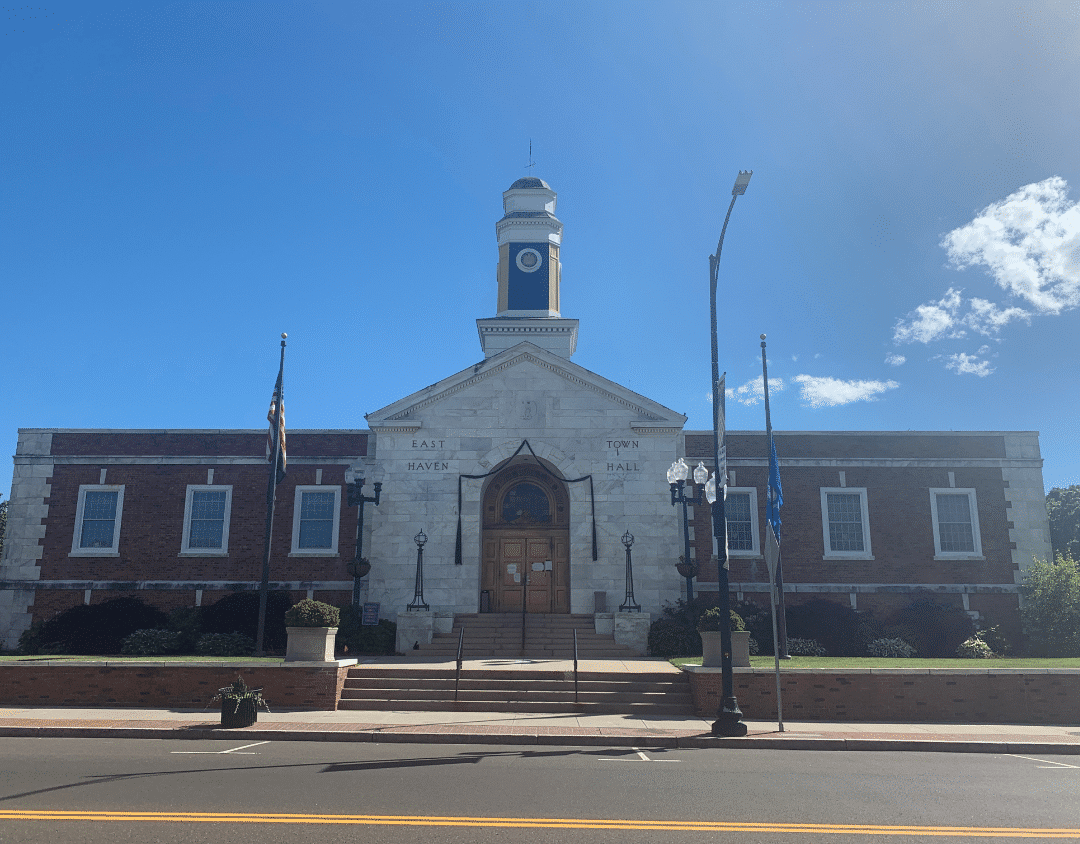
East Haven

Guilford
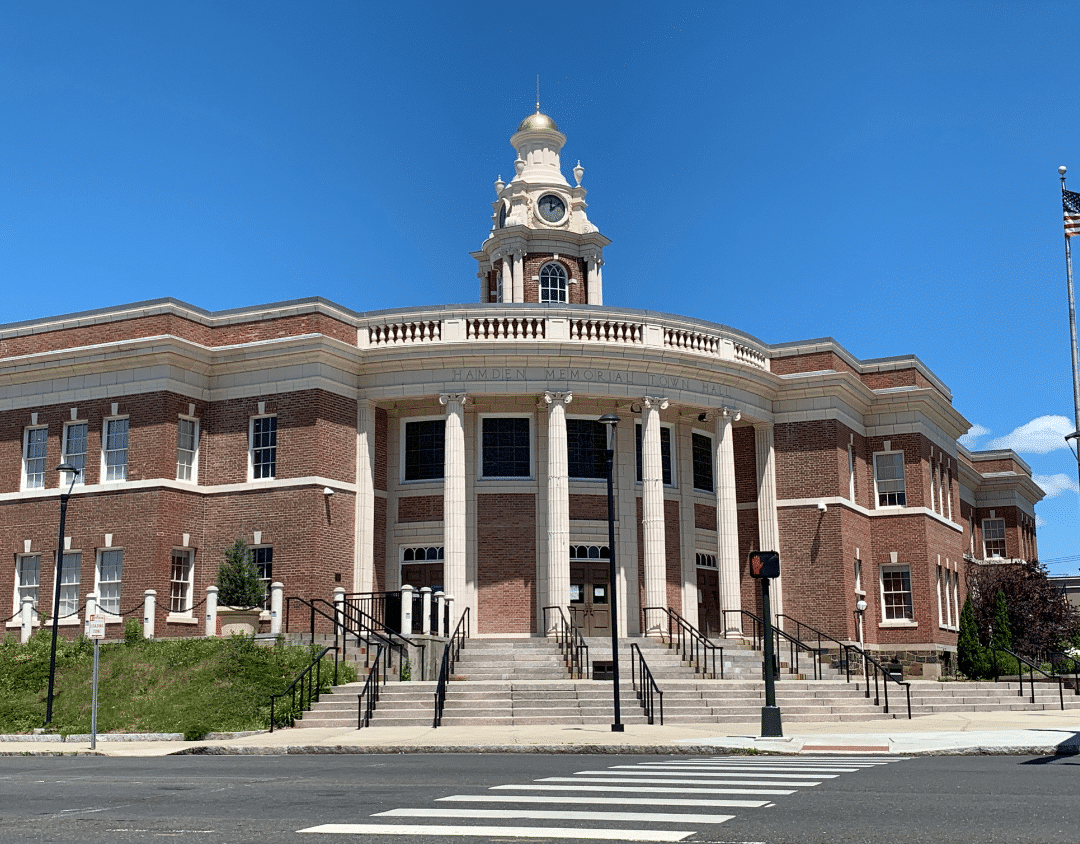
Hamden
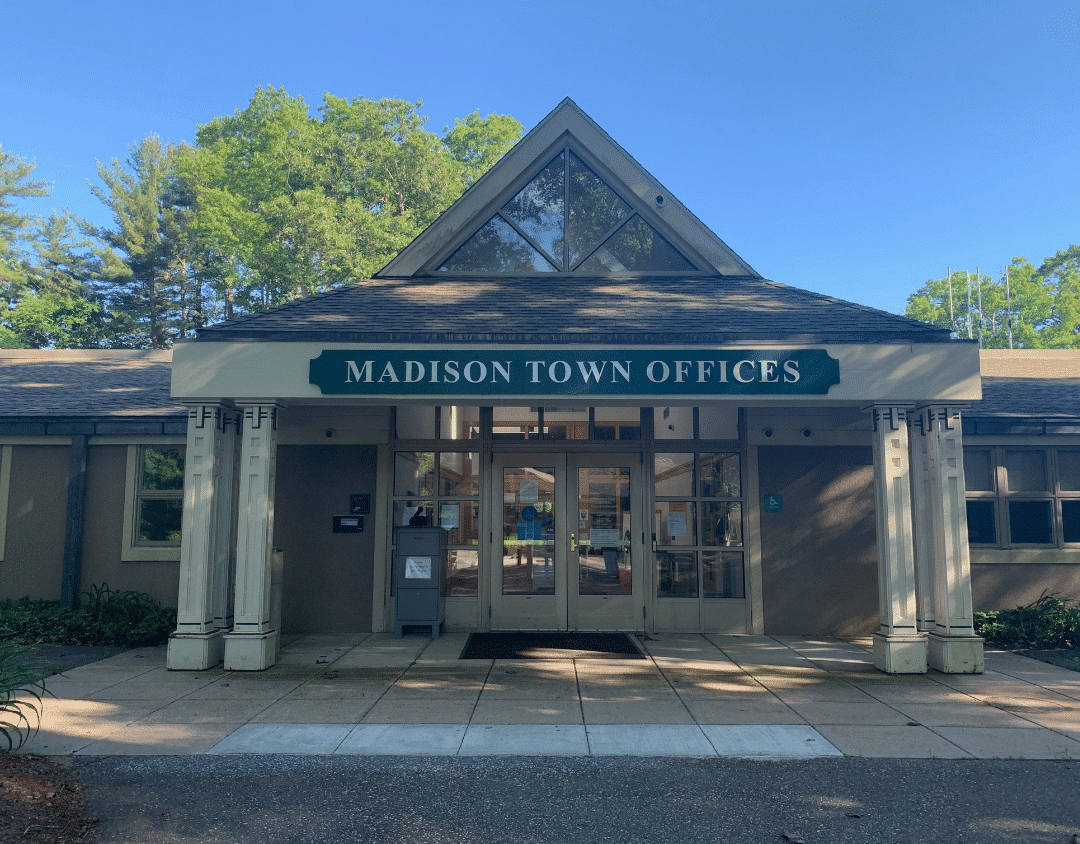
Madison

Meriden
Middlebury

Milford
Naugatuck
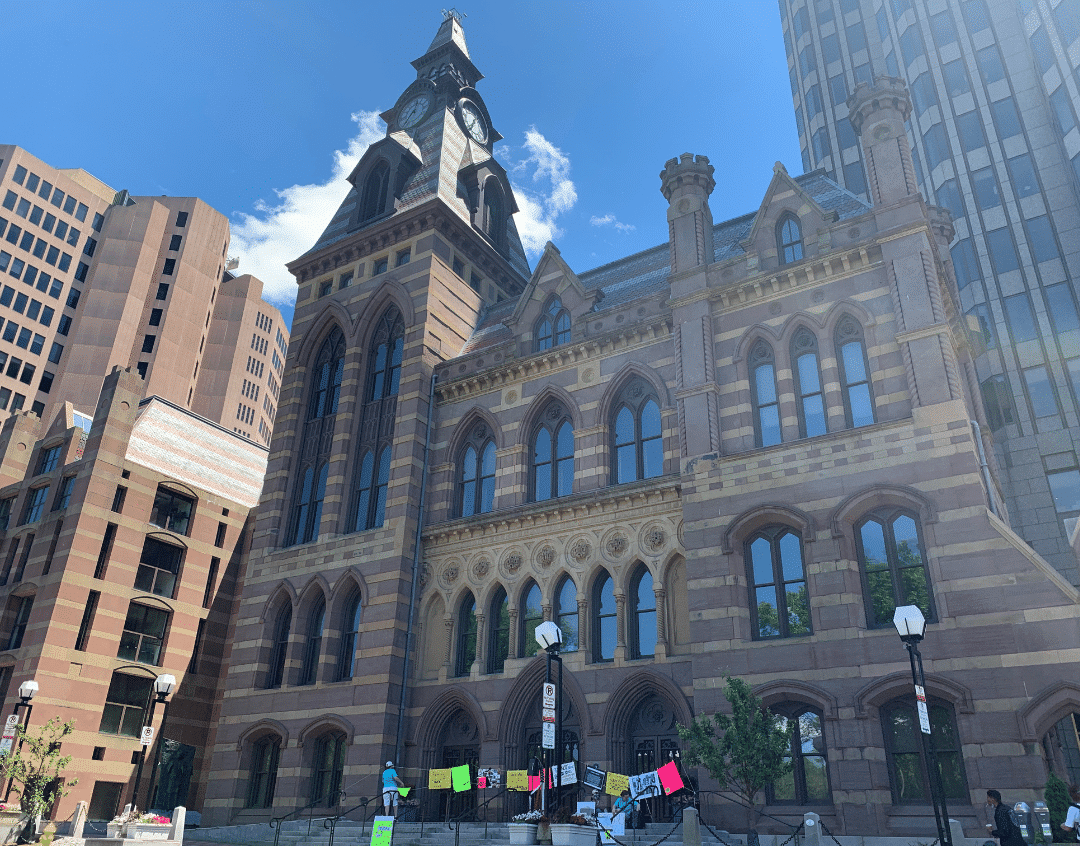
New Haven
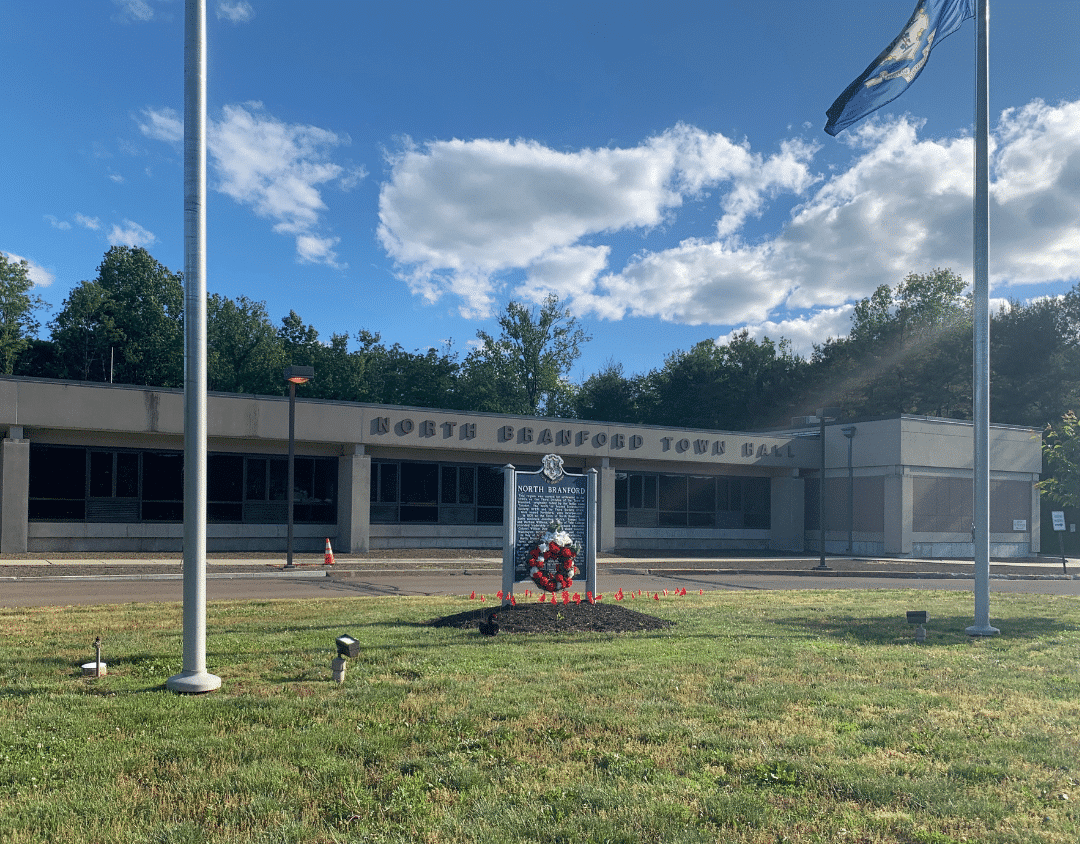
North Branford

North Haven

Orange
Oxford
Prospect
Seymour
Southbury
Wallingford
Waterbury
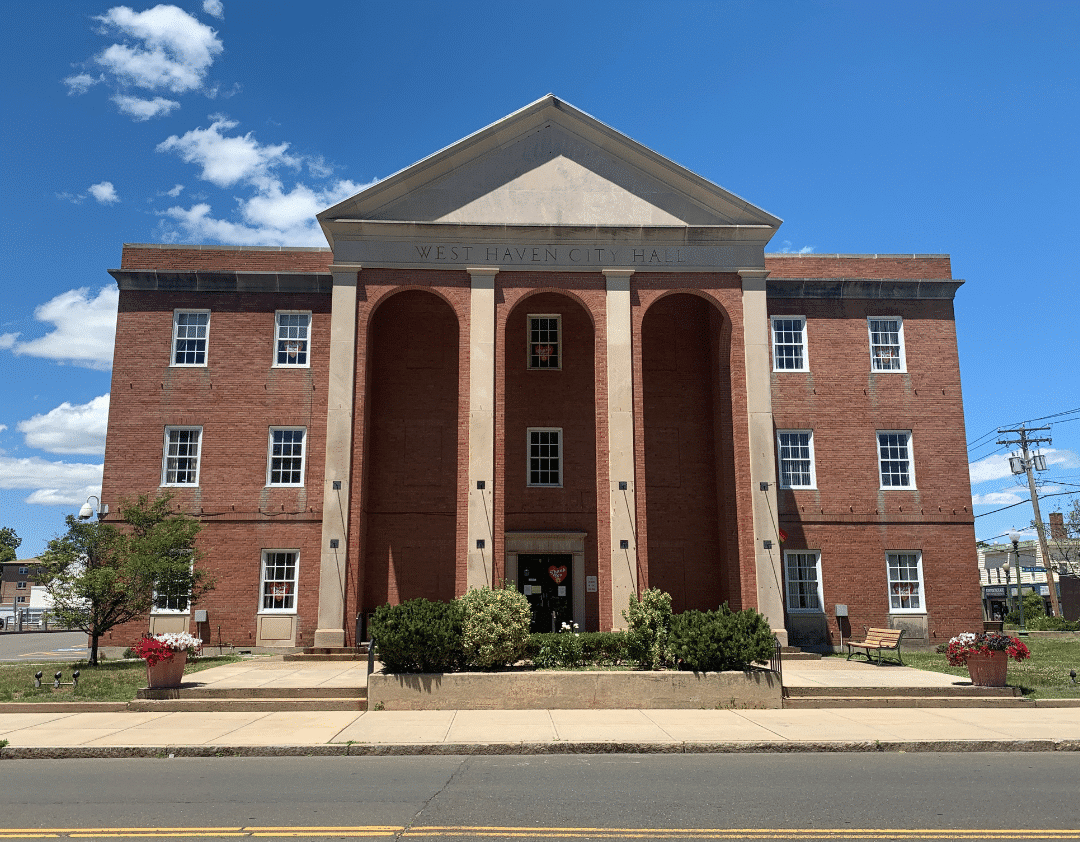
West Haven
Wolcott