
SCRCOG coordinates regional planning across our municipalities to address climate-related challenges and opportunities, including reducing emissions, strengthening resilience, and preparing for future risks. Through coordination across regional plans—such as the ImpaCT 2050 Plan, Hazard Mitigation Plans and Plans of Conservation and Development—as well as cross-collaborative working groups, SCRCOG supports local governments and communities in advancing sustainable and resilient practices that improve public health, infrastructure reliability, and long-term economic stability.
ImpaCT 2050: Comprehensive Climate Action Plan (CCAP)
In July 2023, SCRCOG was awarded a Climate Pollution Reduction Grant (CPRG) of $1 million through the federal Environmental Protection Agency (EPA). Established through the Inflation Reduction Act, the CPRG program supports state and metropolitan areas to make and implement plans to reduce greenhouse gas emissions (GHGs), with 40% of the benefits flowing to low-income and disadvantaged communities.
This four-year grant funds two stages of climate action planning for the New Haven-Milford region:
(1) a Priority Climate Action Plan (PCAP) that addresses short term solutions for GHG reduction efforts, and
(2) a Comprehensive Climate Action Plan (CCAP) that addresses long term goals.
Both plans have been completed as of December 2025 outlining a regional greenhouse gas inventory and offering direct solutions for municipalities to improve air quality, create jobs, and ensure the region’s low-income and disadvantaged communities are prioritized.
The mission of Impact 2050 is to create pathways to an equitable climate future and to improve the quality of life for all in New Haven County.
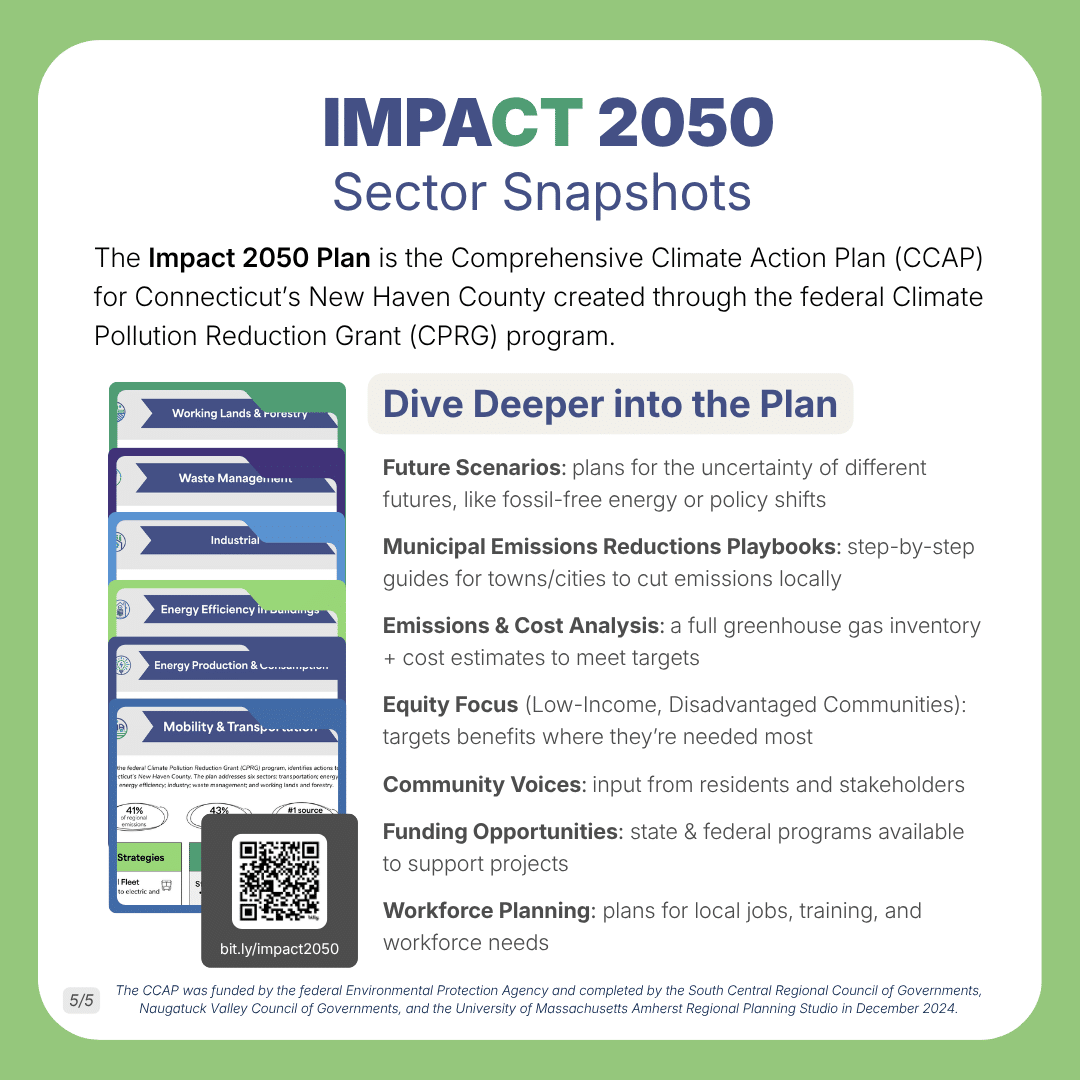
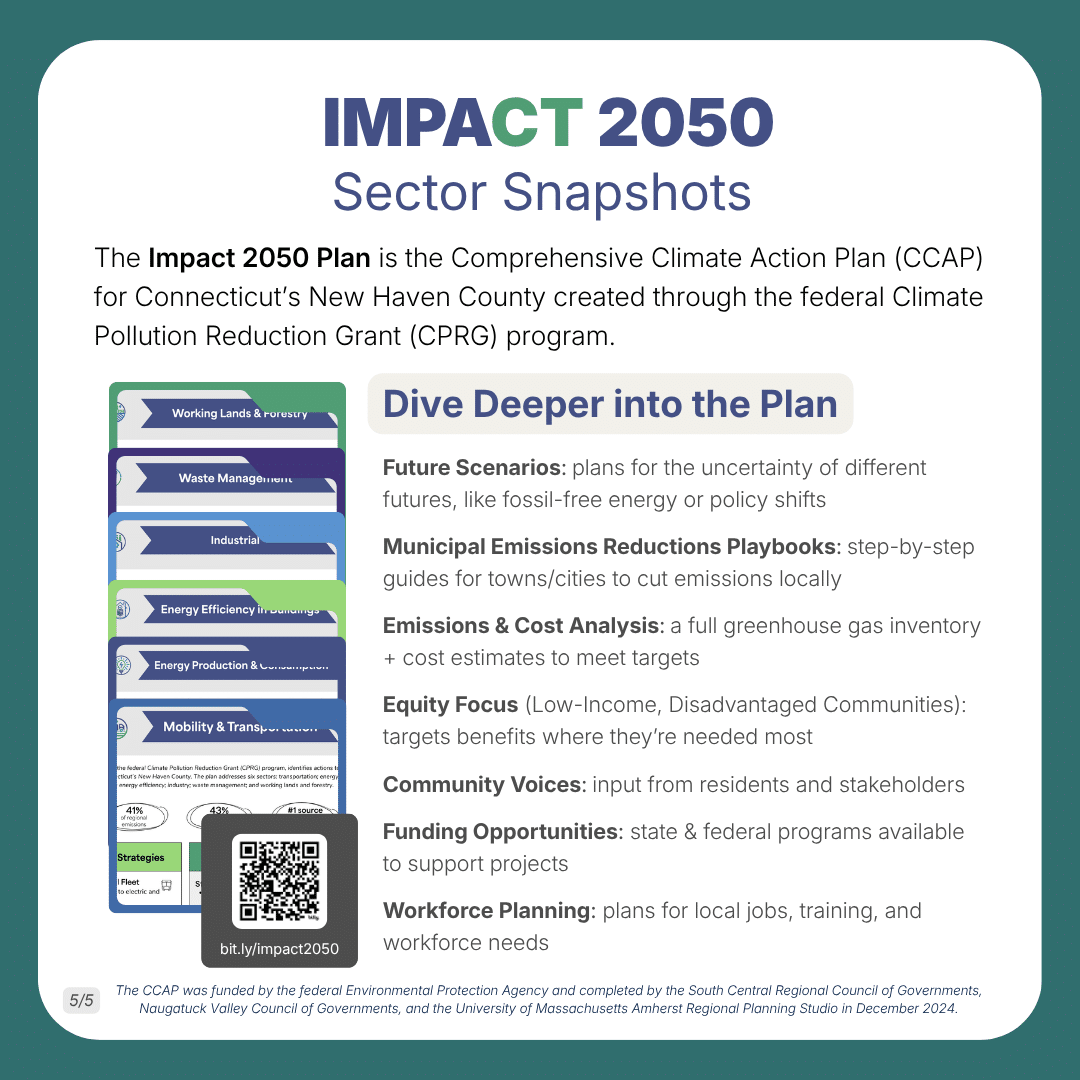
Written in 2024 and 2025, the CCAP is the second major deliverable for the Climate Pollution Reduction Grant. The CCAP contains an extensive inventory of greenhouse gas emissions across six sectors for the region, projections of emissions toward 2050 based on four scenarios, actions, policies, and strategies municipalities can take to reduce emissions, an analysis of the workforce required to implement these actions, and a review of the costs and funding opportunities to implement reduction measures.
Written in 2023 and 2024, the PCAP is the first major deliverable for the Climate Pollution Reduction Grant. The PCAP contains an inventory of where greenhouse gases are being created across New Haven County industries and contains a list of our recommended strategies for mitigating greenhouse gas emissions.
Sector Snapshots
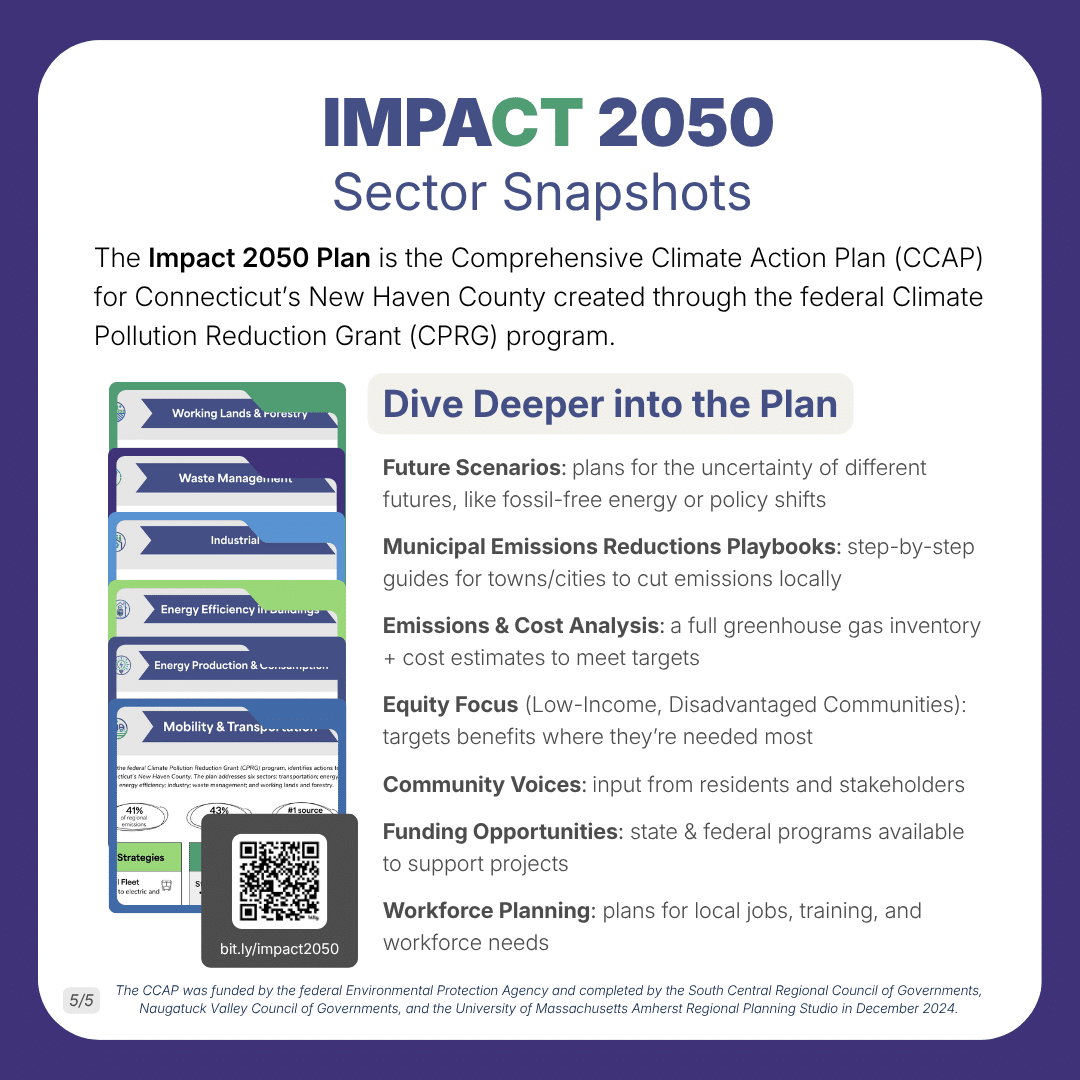
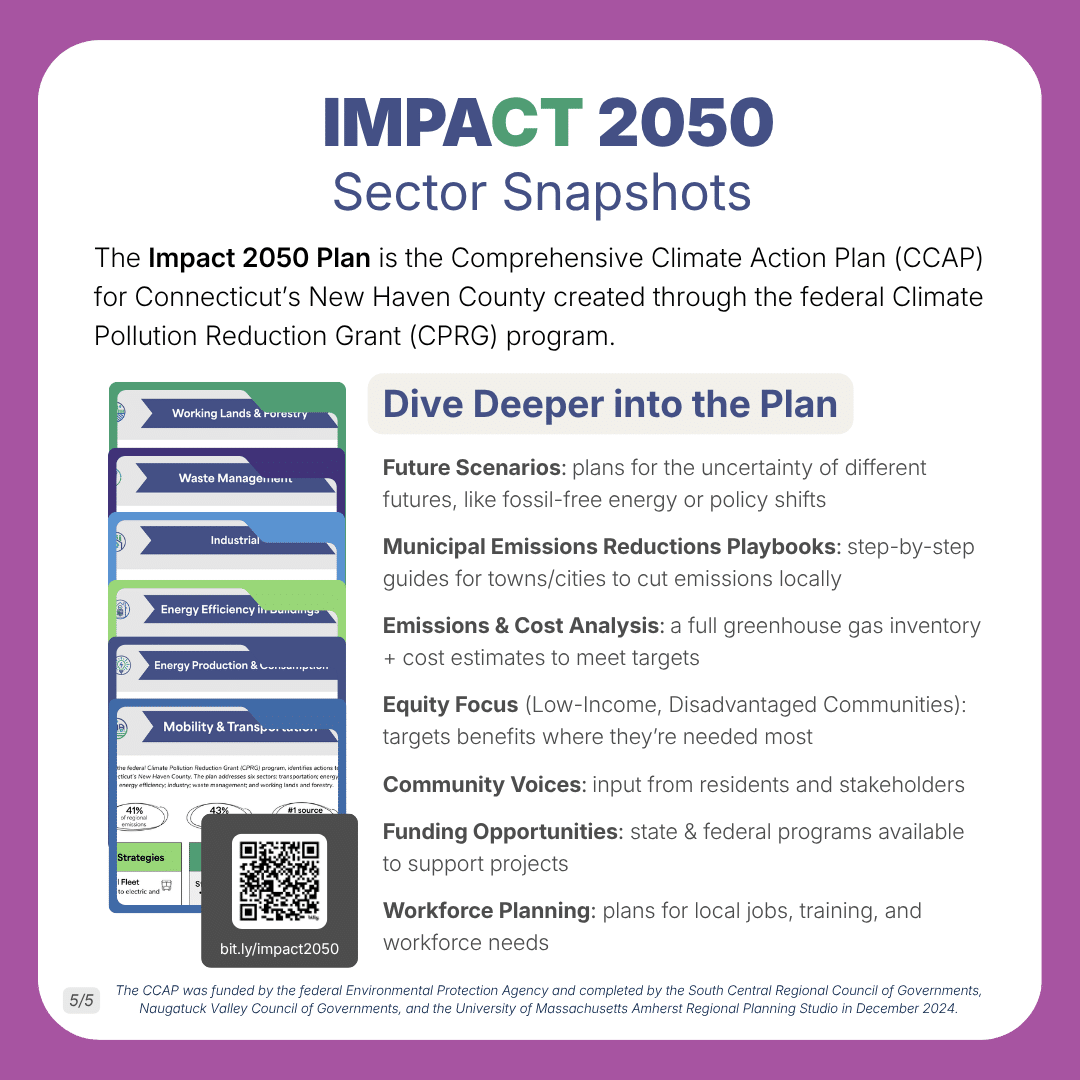
The ImpaCT 2050 plan is packed with resources to better understand where the emissions are, how much reductions cost and how to fund it, who has the authority to implement, and step-by-step guidance tailored to individual municipalities. The Path to ImpaCT 2050 Sector Snapshot series features digestible infographics for each of the six sectors addressed in the plan. Explore them below and click to view the full post on our social media pages.

Transportation
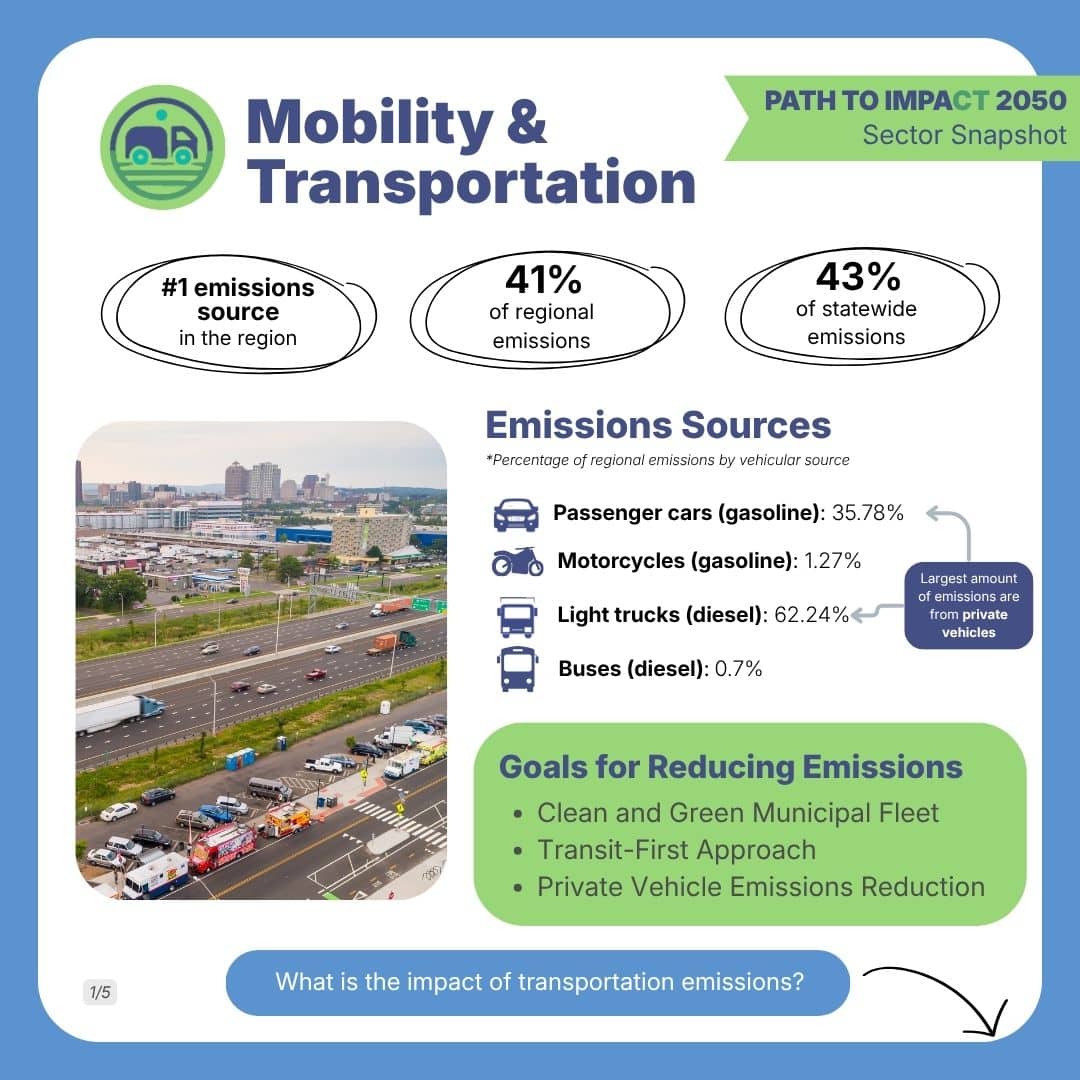
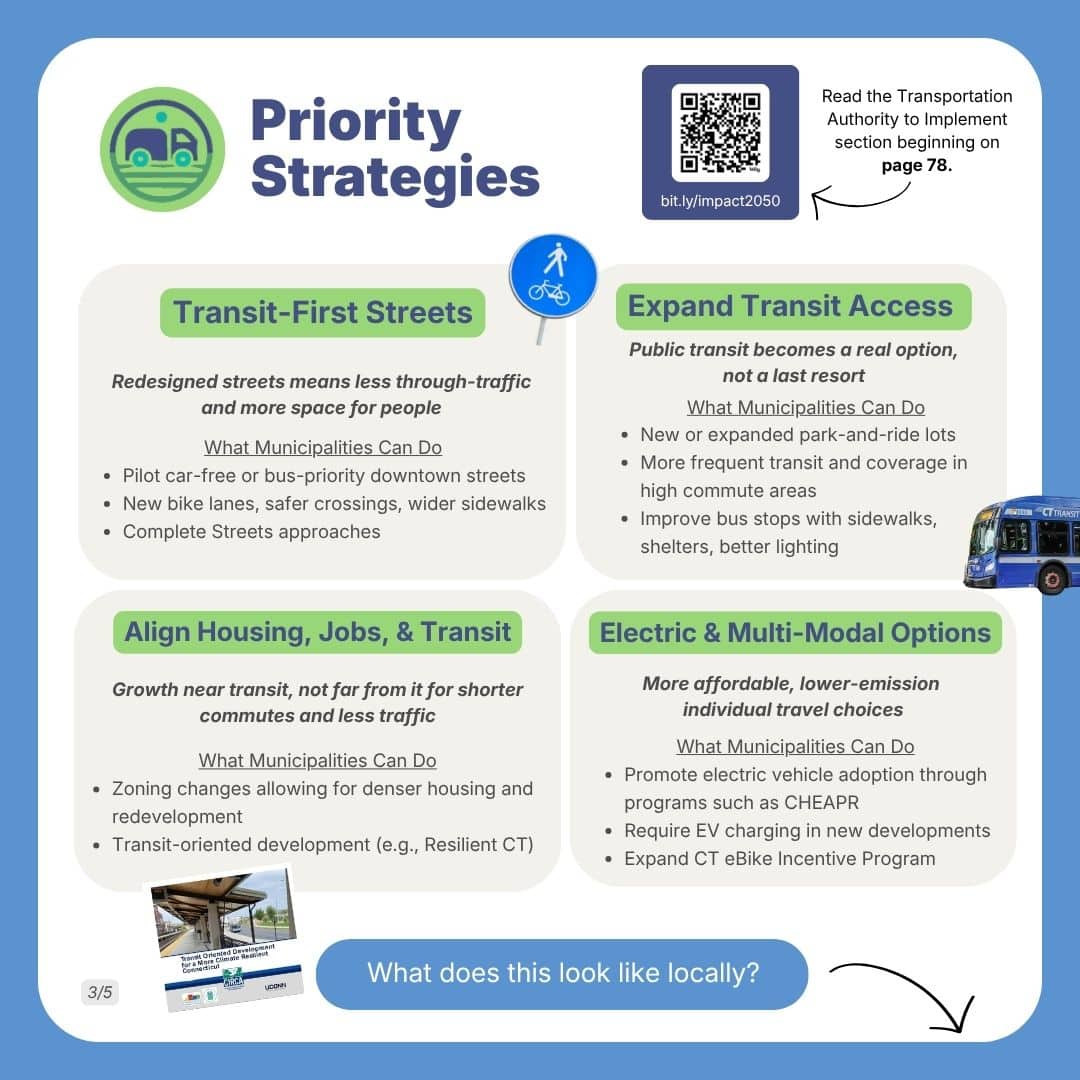
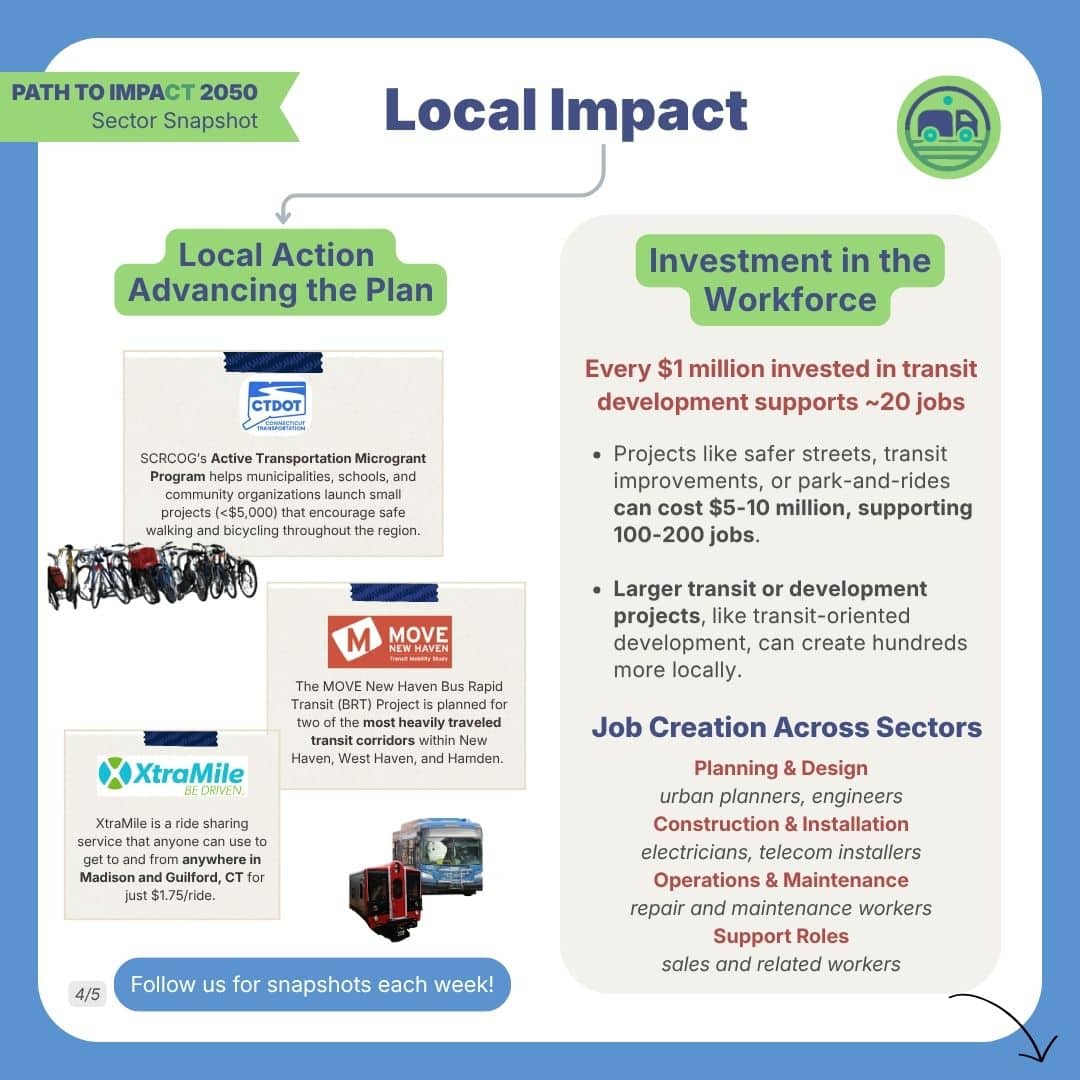
With its complex system of highways, railroads, ports, airports, and public transit systems, New Haven County’s transportation network is unique, considering its size. Transportation is the most significant sector contributing to GHG emissions in the state and the county, with cars and light trucks being primary contributors. In contrast, public transport only accounts for 0.24% of the emissions from this sector.

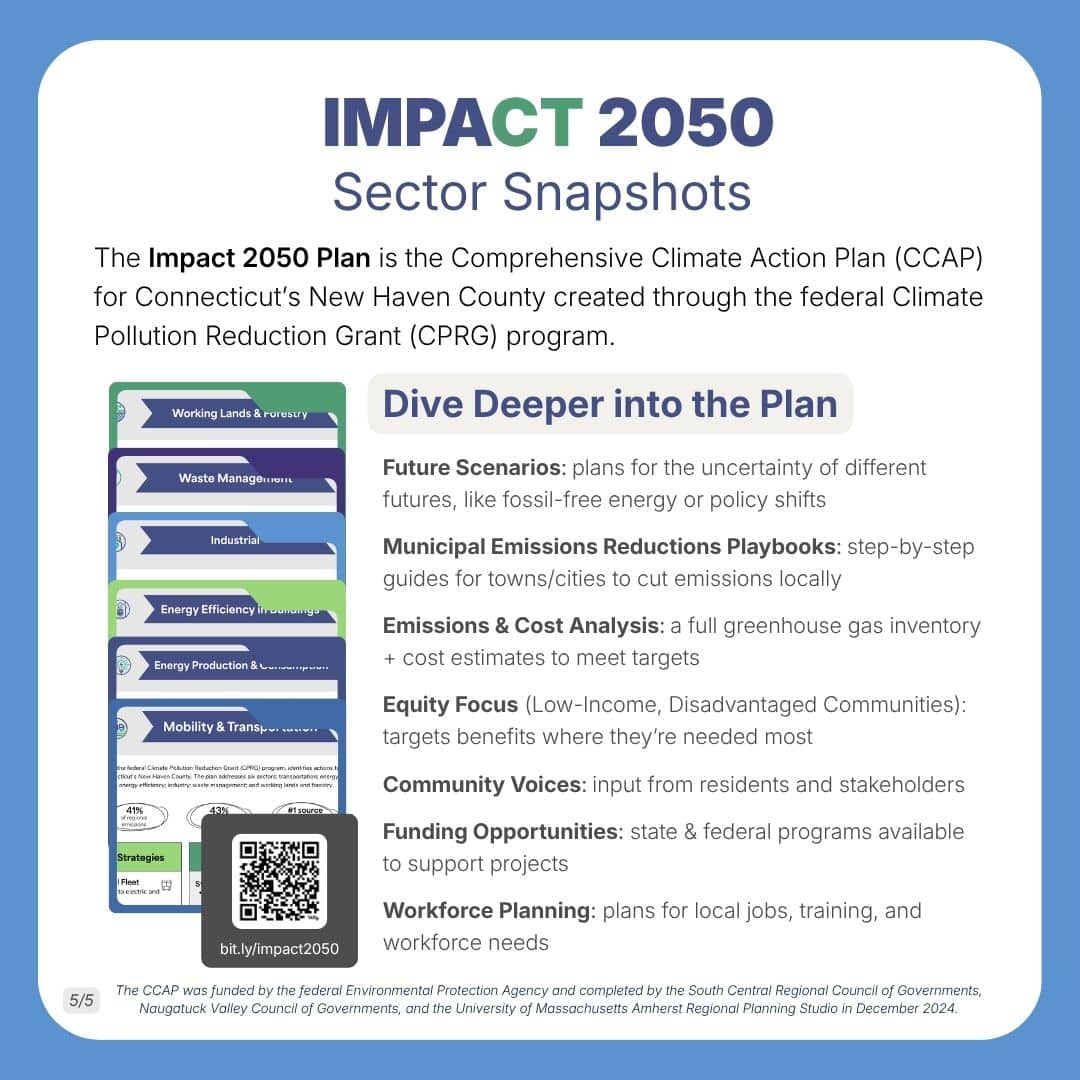

Energy Production and Consumption
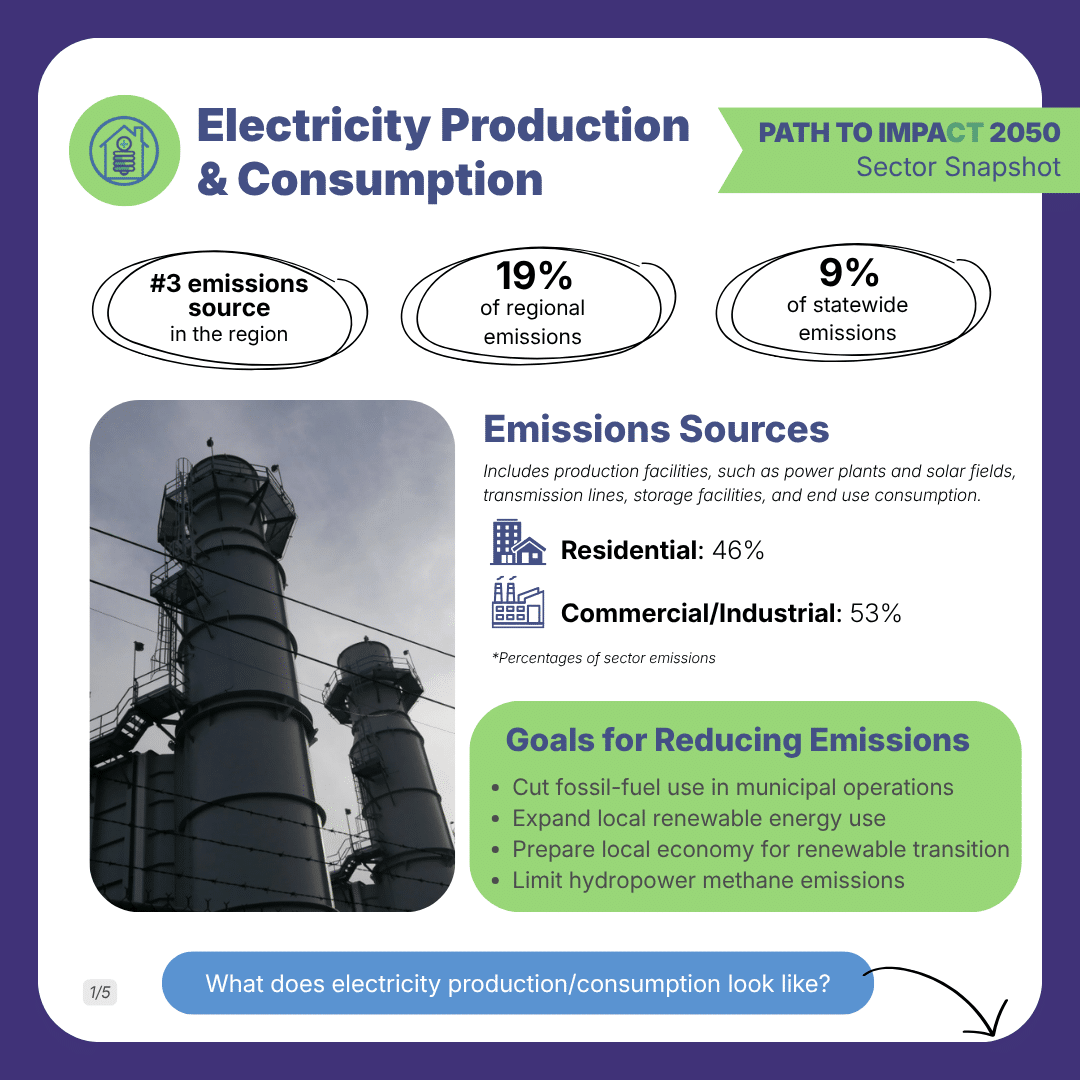
Currently, the electricity sector accounts for 15% of the state’s total GHG emissions (CT DEEP). However, emissions are expected to rise if the electrical grid does not move off of combustion of fuel sources as we electrify our cars, homes, and businesses. We can support this transition by procuring renewable energy for municipal operations, utilizing on site solar, and supporting consumer solar incentives.



Energy Efficiency in Buildings
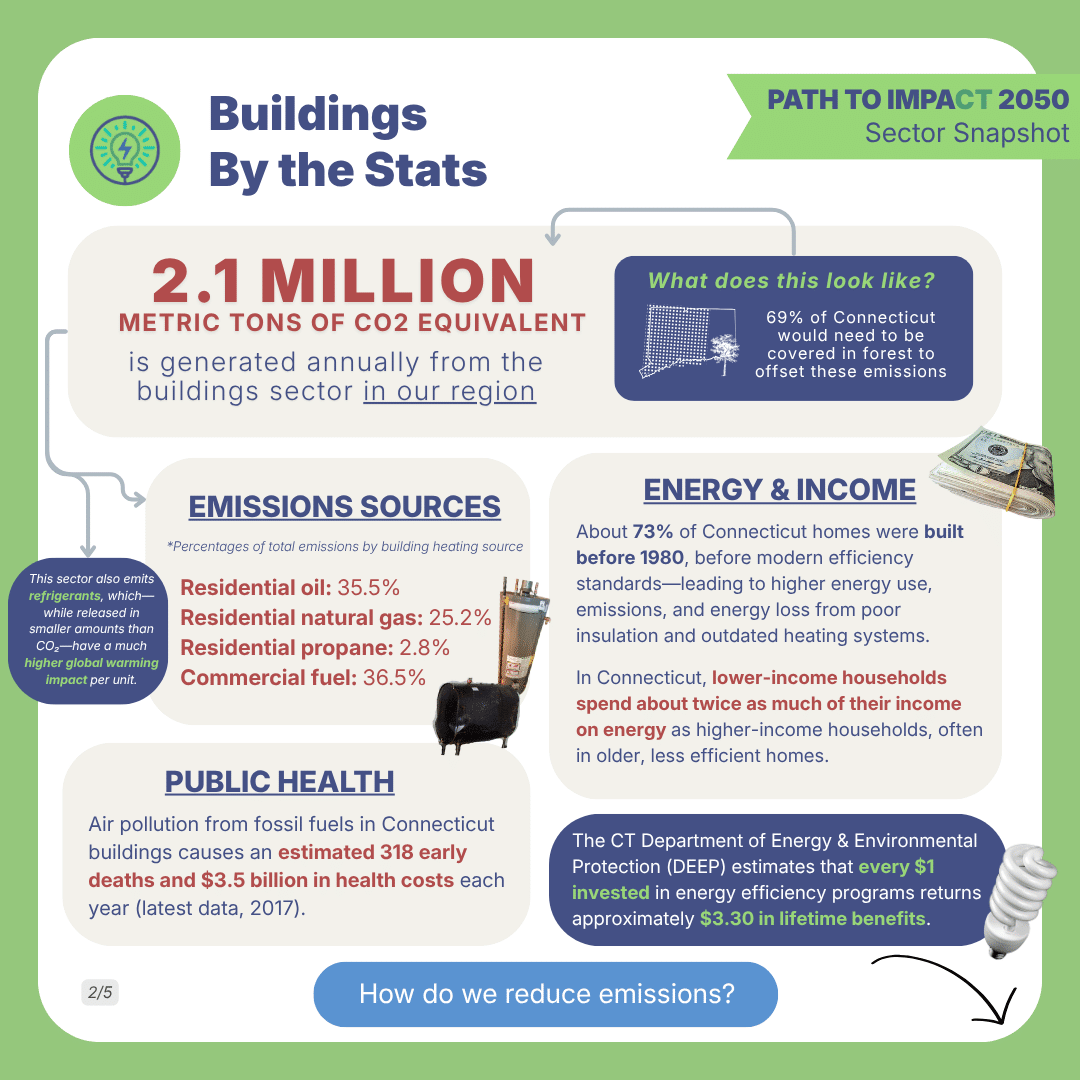
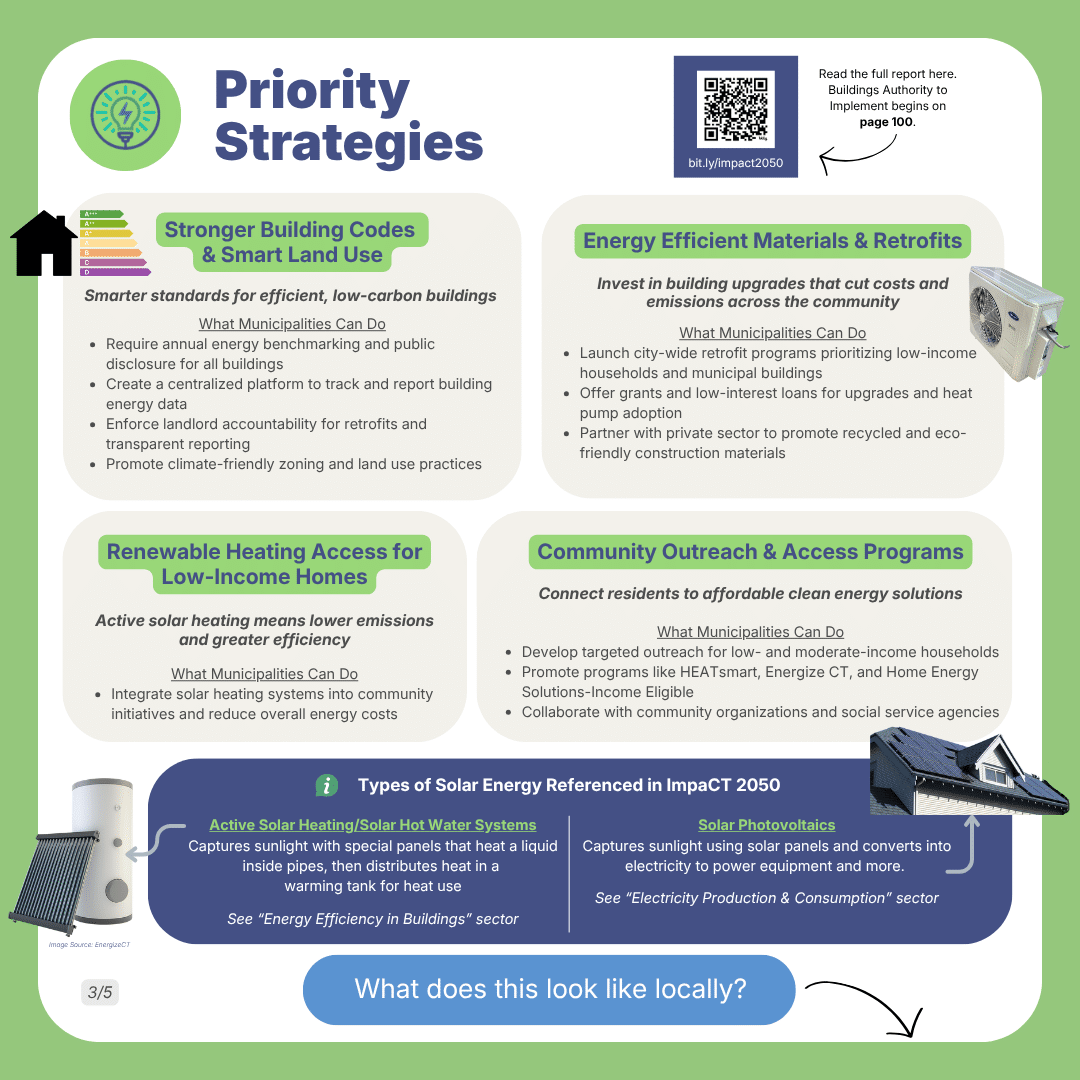
Energy efficiency in buildings is crucial as it reduces energy consumption, lowers operating costs and decreases greenhouse gas emissions. It is an essential sector to help combat climate change while promoting sustainability and cost savings. Improved energy efficiency in buildings also enhance the quality of life and productivity while reducing the reliance on finite energy sources and promoting long term economic reliance.



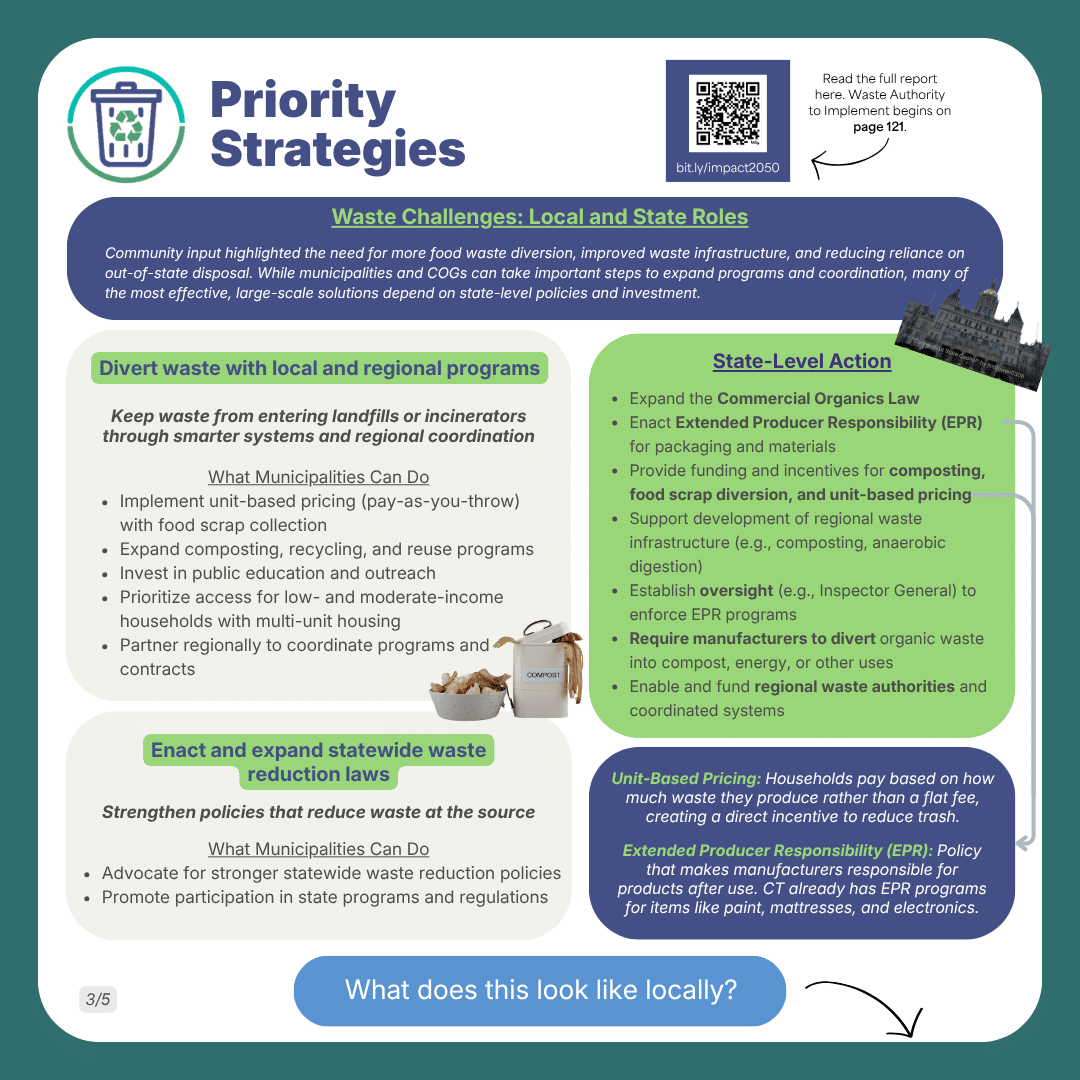
Waste Management
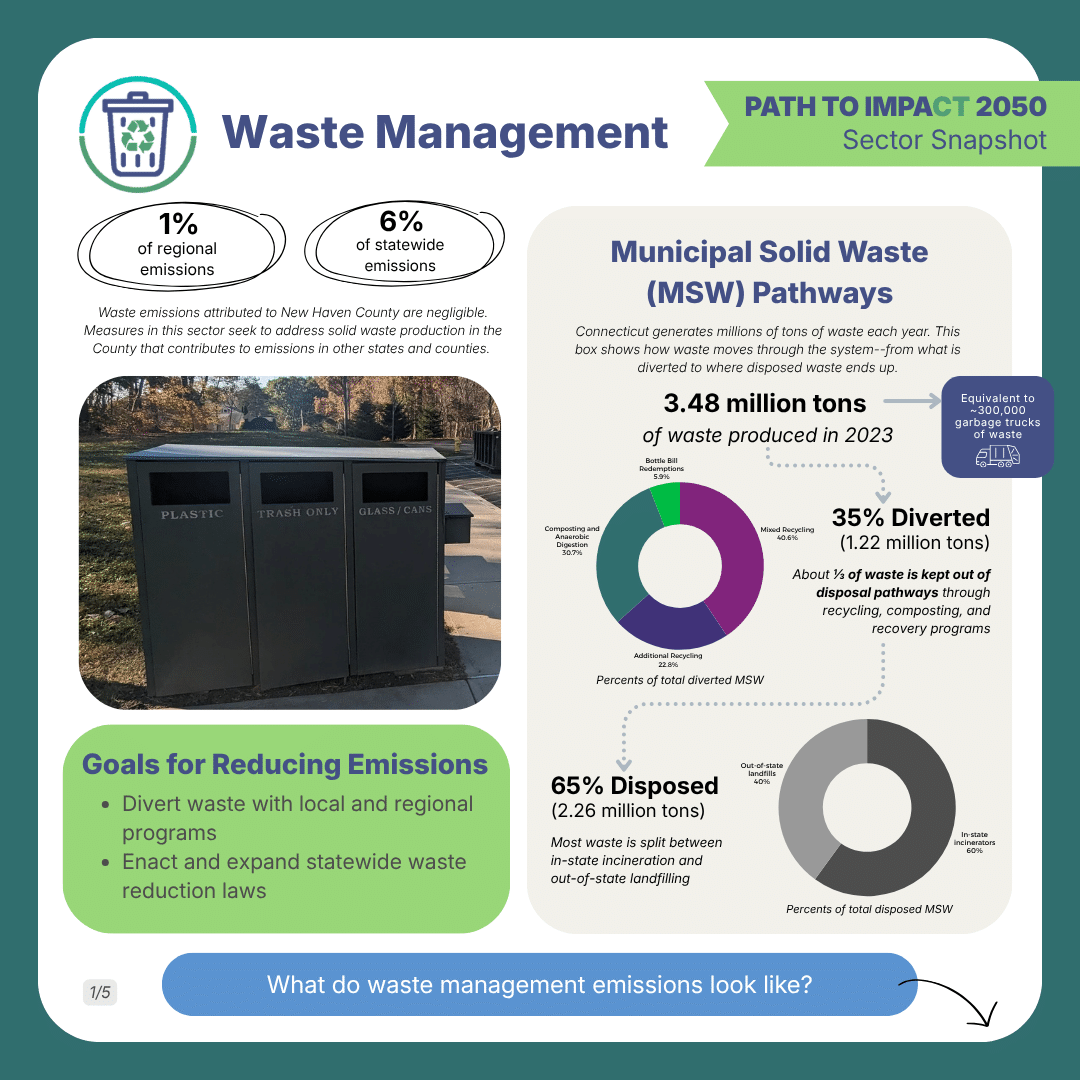
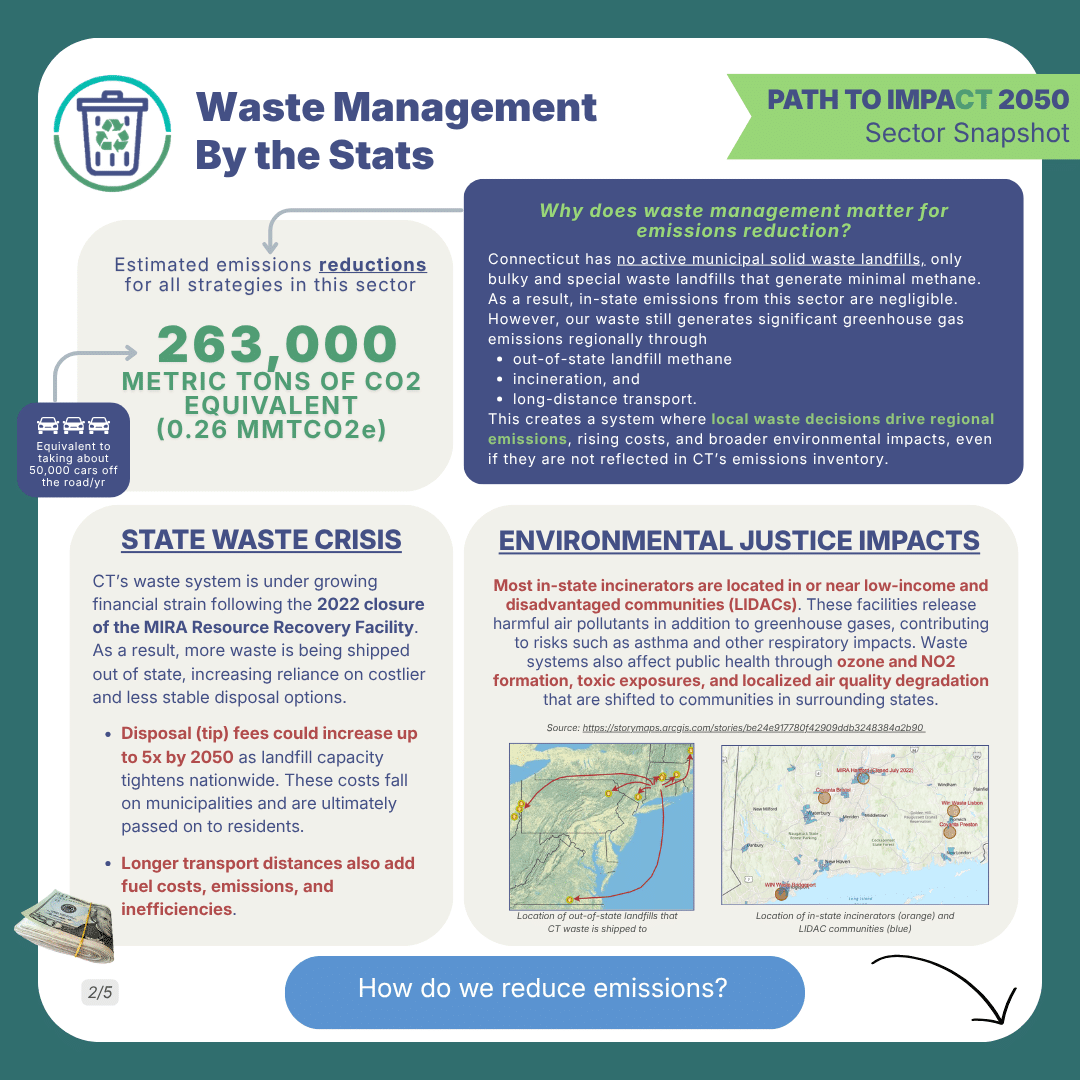
With the recent closure of a substantial waste-to-energy plant, waste management has become a pressing issue for Connecticut, which now ships 40% of its garbage to Ohio and Pennsylvania at a significant cost. The need to find cost-effective, sustainable waste management solutions is acute; emissions reduction strategies can play an essential role in solving Connecticut’s waste problem.

Industry
The New Haven-Milford MSA’s industrial sector includes diverse sub-industries, with retail trade, health care and social assistance, accommodation and food services, construction, and professional and technical services emerging as the top industries. Collectively accounting for 13% of the total emissions of the New Haven-Milford MSA, industrial processes are carbon intensive and often release potent emissions with a global warming potential significantly surpassing carbon dioxide.



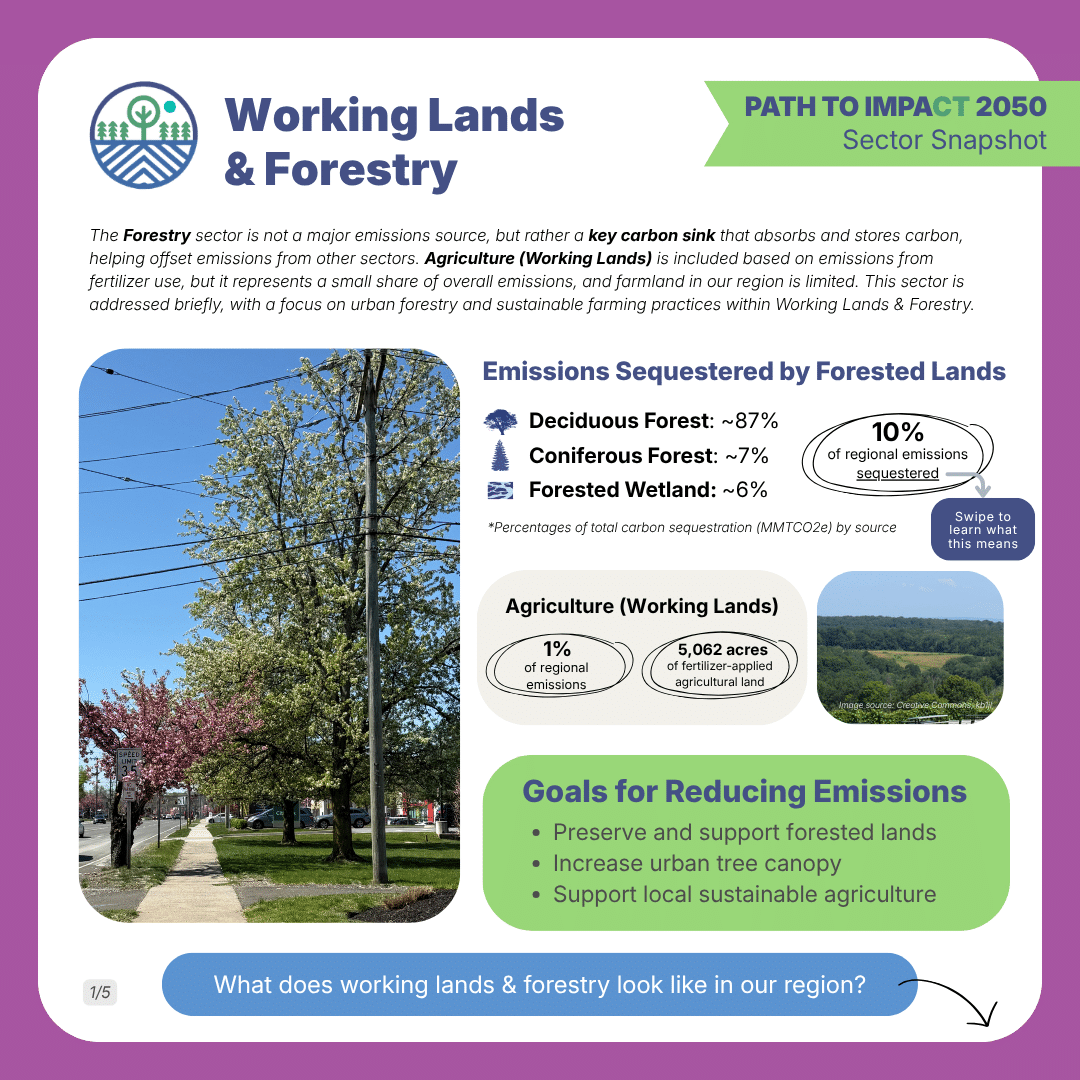
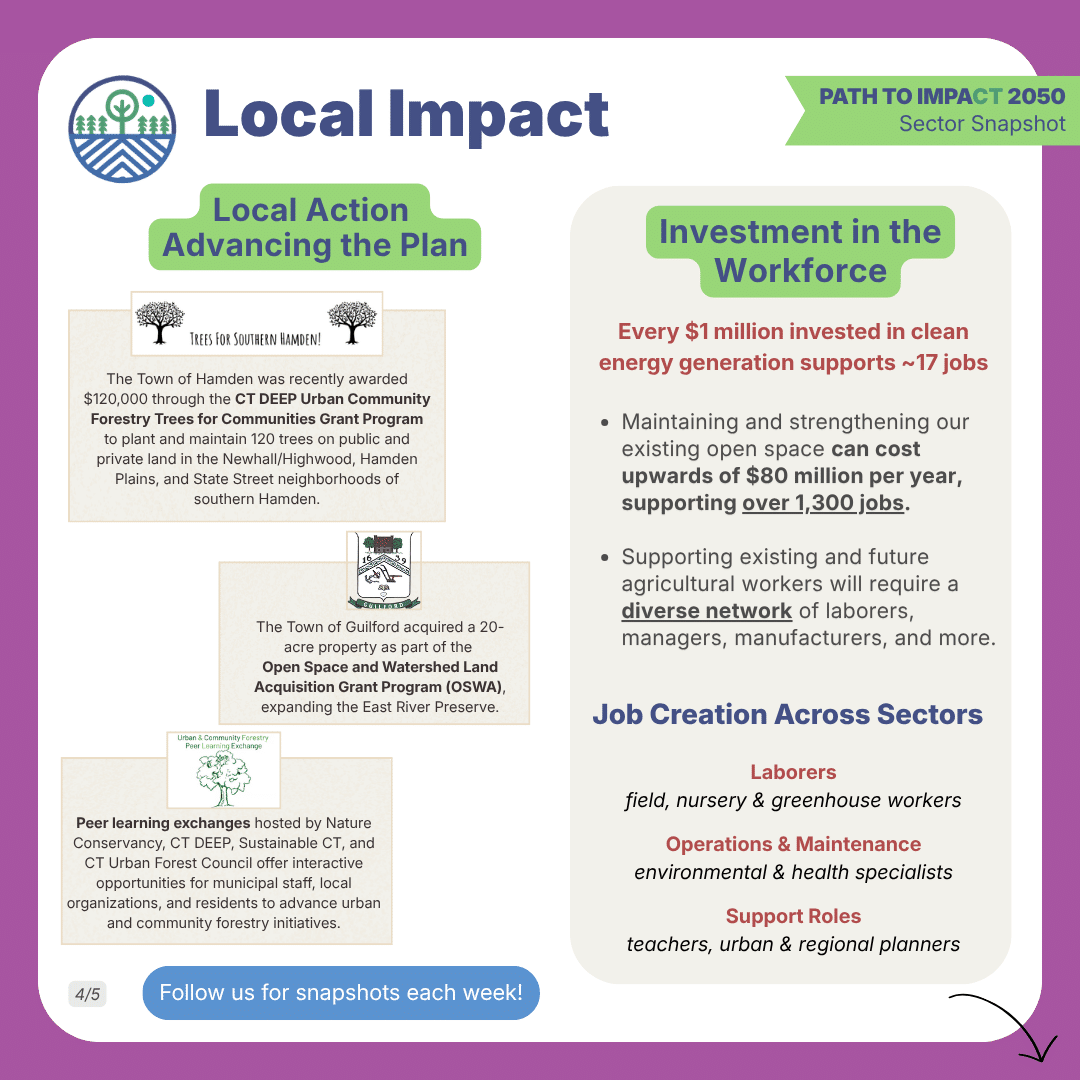
Working Lands and Forestry
Working lands and forests play a pivotal role in strategies to mitigate emissions through effective carbon sequestration and storage measures. While this sector may not be a major emissions contributor, healthy, productive forests can help offset carbon and offer a multitude of ecological, economic, and social benefits.


Municipal Emissions Reduction Playbooks (MERPs)
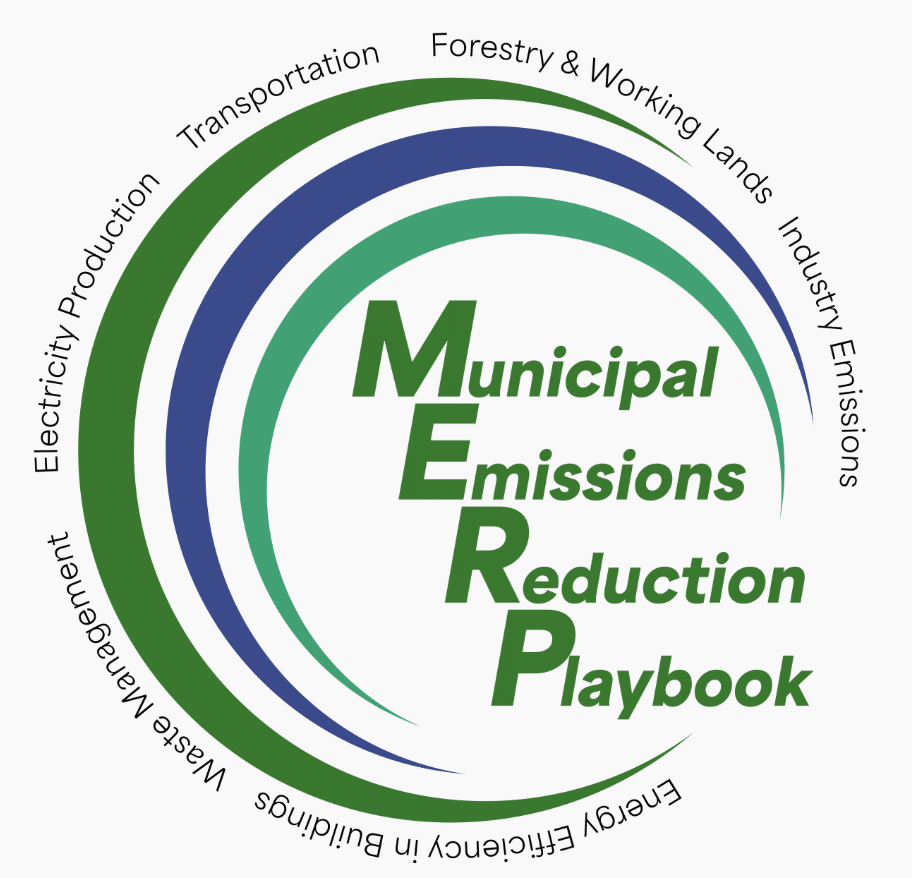
While the PCAP and CCAP strategies are each proven to reduce greenhouse gas emissions, some are more effective than others, and different cities may or may not be already using them. To navigate strategies within the context of an individual city’s climate planning, the UMass Amherst team developed Municipal Emissions Reduction Playbooks (MERPs). MERPs provide local governments the ability to assess current planning around GHG emissions and decide which policies to implement (or to pause) depending on their level of overall impact on GHG reduction. Recommended strategies are limited to those that local governments have the authority to implement as identified in the PCAP and CCAP. Evolving local, regional, and global forces bring new opportunities and challenges. Each MERP has functions to let you update it over time and meaningfully engage with your community members and stakeholders.
Ansonia
Beacon Falls
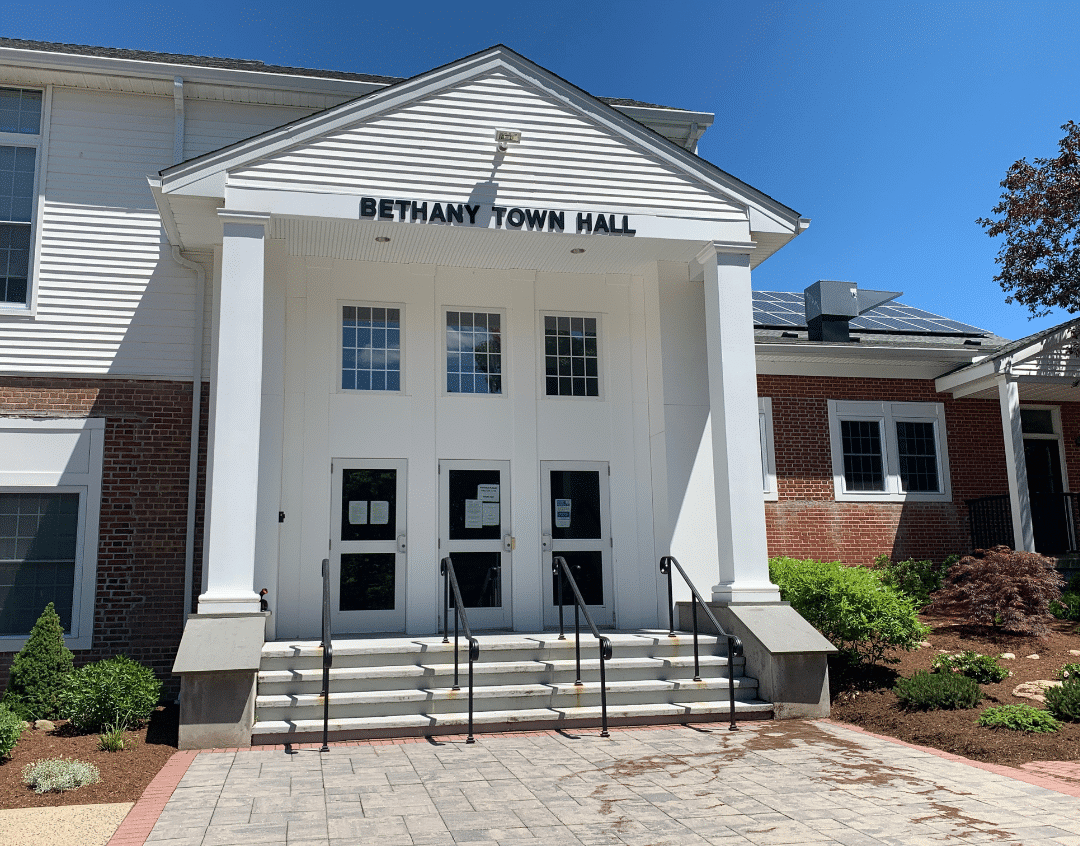
Bethany
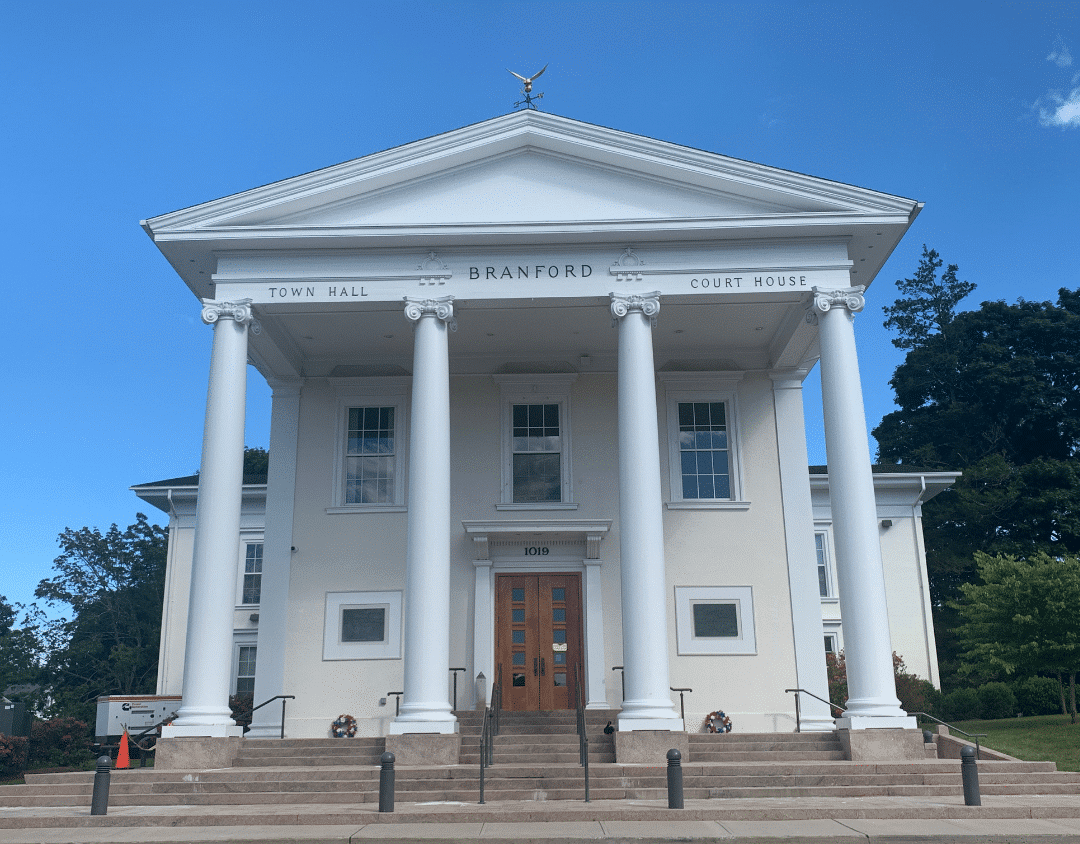
Branford
Cheshire
Derby
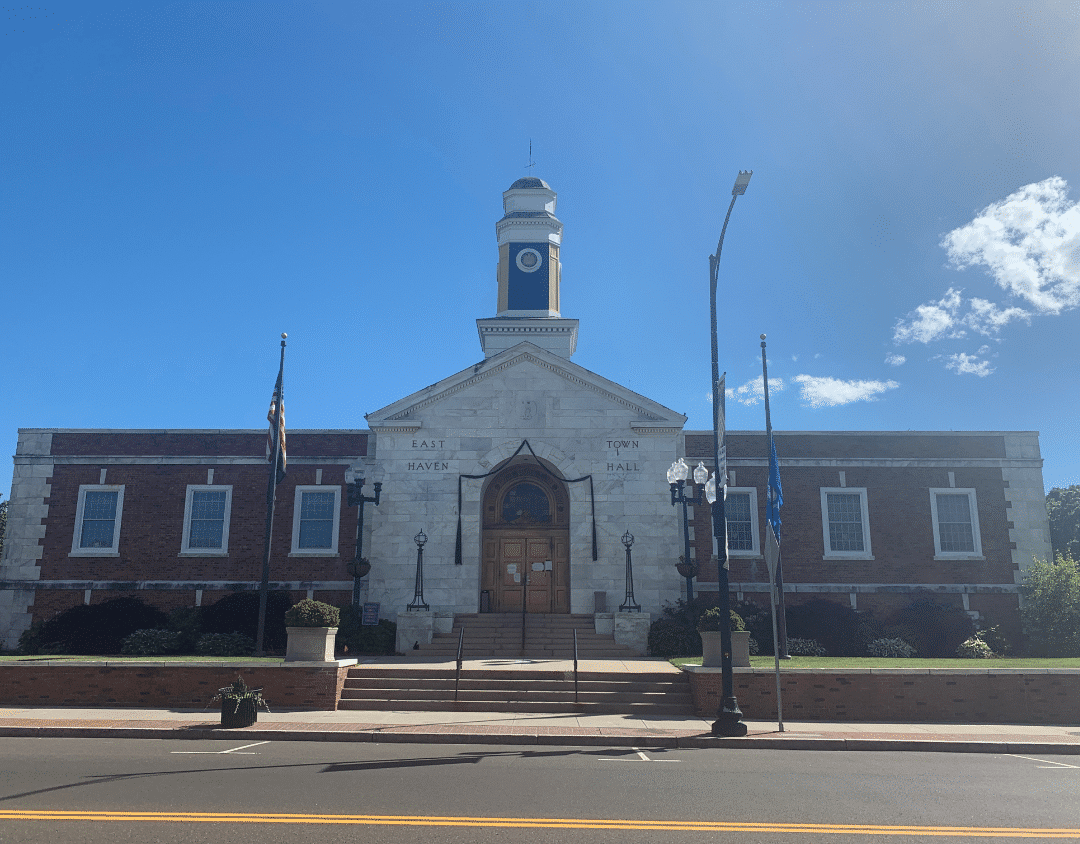
East Haven

Guilford
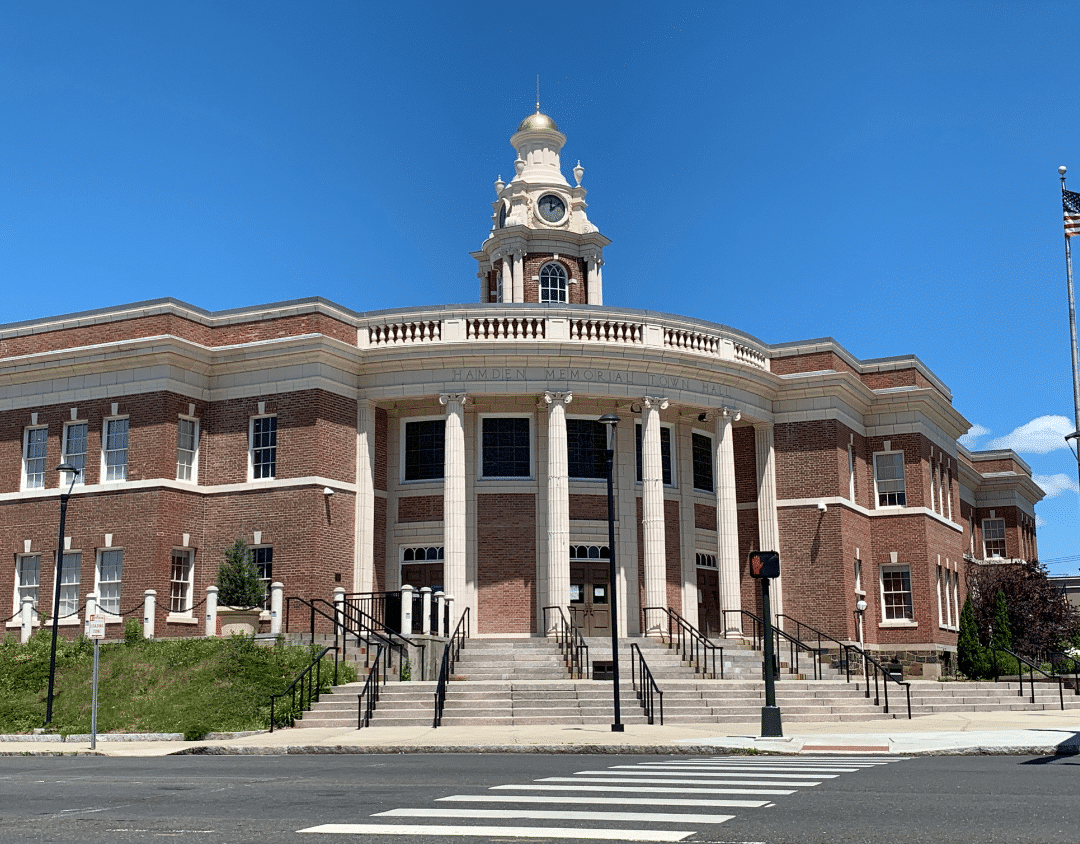
Hamden
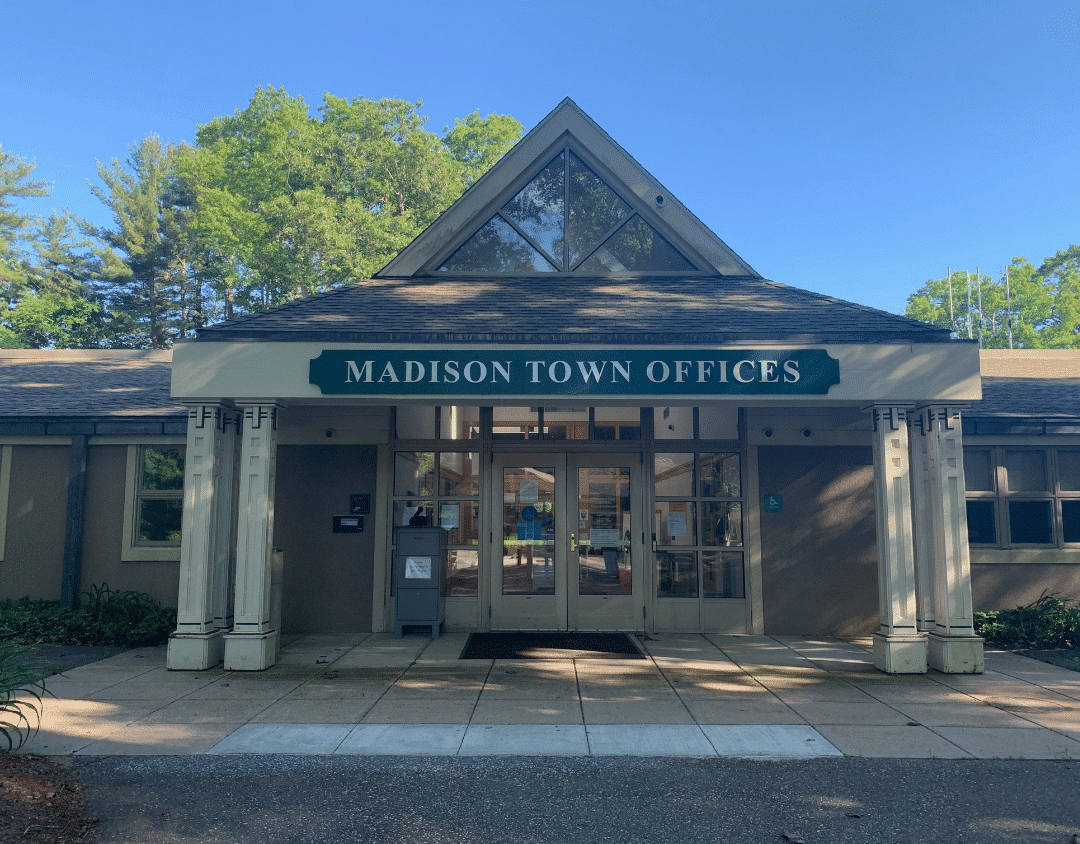
Madison

Meriden
Middlebury

Milford
Naugatuck
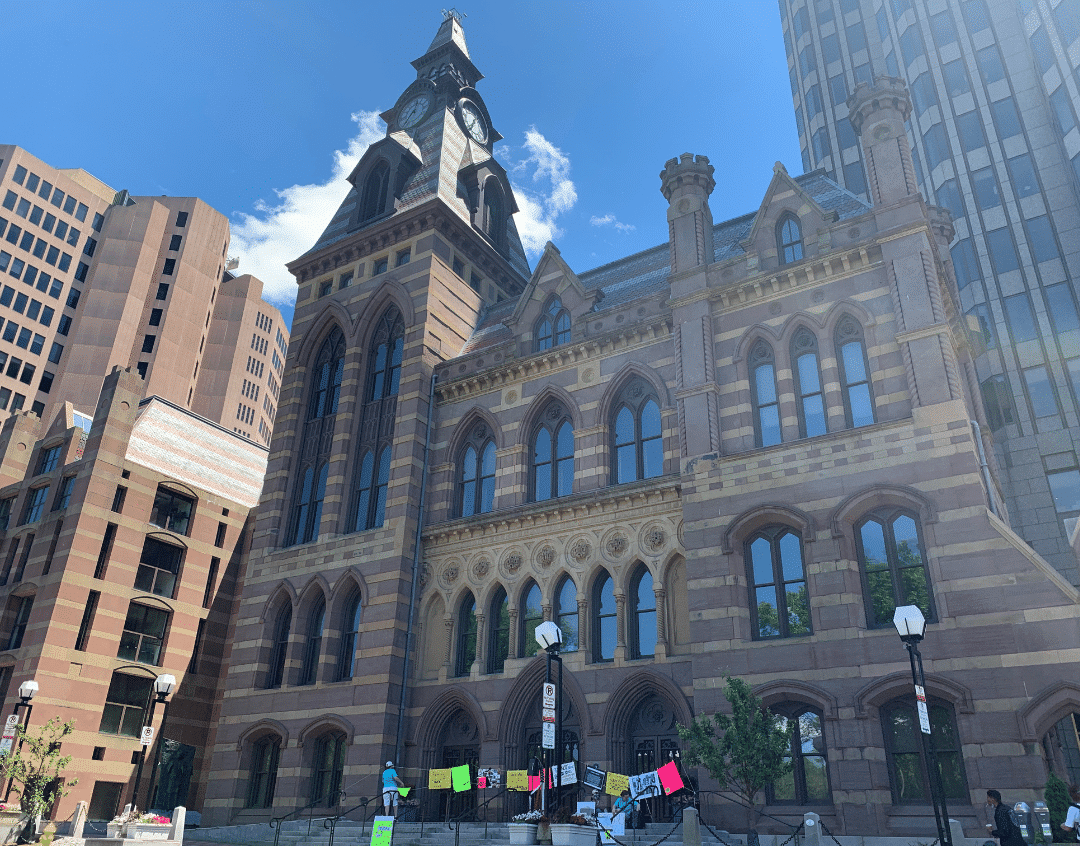
New Haven
North Branford

North Haven

Orange
Oxford
Prospect
Seymour
Southbury
Wallingford
Waterbury
West Haven
Wolcott

Woodbridge
About the Climate Pollution Reduction Grant

In July 2023, SCRCOG was awarded a Climate Pollution Reduction Grant (CPRG) of $1 million through the federal Environmental Protection Agency (EPA). Established through the Inflation Reduction Act, the CPRG program supports state and metropolitan areas to make and implement plans to reduce greenhouse gas emissions (GHGs), with 40% of the benefits flowing to low-income and disadvantaged communities.
This four-year grant funds two stages of climate action planning for the New Haven-Milford region:
(1) a Priority Climate Action Plan (PCAP) that addresses short term solutions for GHG reduction efforts, and
(2) a Comprehensive Climate Action Plan (CCAP) that addresses long term goals.
Both plans have been completed as of December 2025 outlining a regional greenhouse gas inventory and offering direct solutions for municipalities to improve air quality, create jobs, and ensure the region’s low-income and disadvantaged communities are prioritized.
SCRCOG is the lead organization for the CPRG climate action plans for the New Haven-Milford metro area, which includes some communities represented by NVCOG. The plans were developed in partnership with:
- University of Massachusetts Amherst Landscape Architecture and Regional Planning Department
- SLR Consulting
- Keramida
